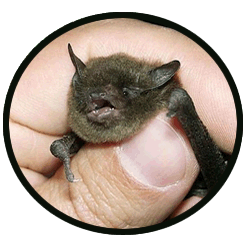
What Do Bats Look Like?
Bats look like small mammals with wings! Their wings are actually modified hands - thin membranes stretch between super-long finger bones. The scientific name for bats (Chiroptera) means "hand-wing!"
Bat sizes vary dramatically! The smallest is the Bumblebee Bat (Kitti's hog-nosed bat) - only 1 inch long and weighing 0.05 ounces (less than a penny!). The largest are flying foxes - some have 6-foot wingspans and weigh 3.5 pounds! Most bats are small - between 2-5 inches long.
Bat wings are amazing! Wings are made of thin, flexible skin (membrane) called the patagium. This membrane stretches between arm, hand, and finger bones down to legs. Bats have thumb claws for climbing. Wings are incredibly sensitive - covered with nerves and blood vessels. Bats can feel air currents and adjust wing positions mid-flight!
There are two main bat groups:
Megabats (Fruit Bats/Flying Foxes):
- Larger size (mostly)
- Fox-like faces with large eyes
- Excellent vision
- Most don't use echolocation
- Eat fruit, nectar, and pollen
- Found in tropical regions (Africa, Asia, Australia)
- Examples: Flying foxes, rousette bats
Microbats (Insect-Eating Bats):
- Smaller size (mostly)
- Varied face shapes (some look bizarre!)
- Small eyes
- Use echolocation for navigation and hunting
- Eat insects, fish, blood, or small animals
- Found worldwide
- Examples: Little brown bats, vampire bats, fishing bats
Many bats have interesting faces! Some have elaborate nose leaves - skin folds around nostrils that help focus echolocation calls. Horseshoe bats have horseshoe-shaped nose leaves! Leaf-nosed bats have spear-shaped nose leaves. These structures make bats look strange but help them "see" with sound!
Bat ears are often huge! Big ears collect echolocation echoes. Some bats have ears nearly as long as their bodies! Townsend's big-eared bat has 1.5-inch ears on a 2-inch body! Large ears help detect the faintest echoes from tiny insects.
Bat fur comes in many colors! Browns and grays are common for camouflage. Some bats are orange, red, yellow, or even white! Honduran white bats are pure white with yellow ears - they look like fluffy cotton balls! Painted bats have orange and black striped fur!
Vampire bats look creepy! They have short snouts, large front teeth, and special heat sensors on their noses for finding blood vessels. Despite scary appearances, vampire bats are only 3 inches long - not dangerous to healthy humans!
Where Do Bats Live?
Bats live on every continent except Antarctica! They thrive in forests, deserts, cities, and mountains - anywhere they find food and shelter.
Bats need roosts! During the day, bats sleep in caves, hollow trees, under bridges, in buildings, mines, and rock crevices. Roosts must be safe from predators and weather. Some bats roost alone, but many species roost in huge colonies - millions of bats packed together!
Bracken Cave in Texas has the world's largest bat colony! Over 15 million Mexican free-tailed bats roost there each summer! At dusk, they emerge in a swirling cloud that takes hours to fully exit. It's one of nature's most spectacular sights!
Some bats are tropical! Flying foxes live in warm regions of Africa, Asia, and Australia. They roost in trees (not caves) hanging upside down in large groups. You can see hundreds of flying foxes hanging from trees in some city parks!
Many bats live in temperate regions! Little brown bats, big brown bats, and other species live across North America, Europe, and Asia. These bats face cold winters. Some migrate to warmer areas. Others hibernate in caves, mines, or buildings.
Bat hibernation is fascinating! Hibernating bats lower their body temperature from 100°F to near-freezing! Heart rate drops from 400 to 25 beats per minute! Breathing slows to one breath every 2 hours! This state (torpor) conserves energy. Bats survive winter on stored fat without eating for months!
White-nose syndrome threatens hibernating bats! A fungus grows on bats' noses during hibernation. It irritates bats, waking them repeatedly. This wastes precious fat stores - bats starve before winter ends! White-nose syndrome has killed millions of North American bats since 2006. Scientists work hard to find solutions!
Urban bats adapt to cities! Bats roost under bridges, in attics, and on buildings. City bats hunt insects around streetlights. Some cities build bat houses - artificial roosts that provide homes for beneficial bats! Austin, Texas is famous for its Congress Avenue Bridge bats - 1.5 million bats live under one bridge!
Desert bats are tough! They survive extreme heat by roosting in cool caves during scorching days. Desert bats drink from desert water sources - streams, pools, and cattle tanks. Pallid bats live in American deserts, hunting scorpions and insects!
What Do Bats Eat?
Bats have diverse diets! Different species eat insects, fruit, nectar, fish, small animals, or blood!
Most bats eat insects:
- 70% of bat species are insectivores!
- Moths, beetles, mosquitoes, flies, and more
- One little brown bat eats 1,000+ mosquito-sized insects per hour!
- Bats catch flying insects mid-air using echolocation
- Some snatch insects from leaves or ground
Fruit bats eat plant materials:
- Fruits like figs, mangoes, bananas, guavas
- Flower nectar and pollen
- Flying foxes chew fruit, swallow juice, spit out pulp
- Important pollinators and seed dispersers!
Some bats eat unusual foods:
- Fishing bats catch fish with long claws!
- Fringe-lipped bats eat frogs
- False vampire bats hunt mice, birds, and lizards
- Pallid bats eat scorpions (immune to stings!)
Vampire bats drink blood:
- Only 3 bat species drink blood!
- They bite livestock (cows, horses, pigs) and lap up blood
- Special heat sensors locate blood vessels
- Saliva contains anticoagulants preventing blood clotting
- Each vampire bat drinks about 2 tablespoons - doesn't harm healthy animals
- Live only in Latin America
Echolocation is incredible! Insect-eating bats make high-pitched sounds (mostly inaudible to humans). Sound waves bounce off objects and return as echoes. Bats' brains analyze echoes, creating 3D sound pictures! Echolocation is so precise that bats detect tiny mosquitoes in complete darkness!
How echolocation works:
- Bat emits ultrasonic calls (20,000-200,000 Hz - too high for human ears!)
- Sound waves travel outward and hit objects
- Echoes bounce back to bat's large ears
- Brain processes echo timing and quality
- Bat determines object location, size, speed, and even texture!
- All this happens in milliseconds!
Bats adjust echolocation for hunting! When searching, bats make slow calls. When closing in on prey, call rate increases to 200 per second - called a feeding buzz! This provides rapid updates as bats zoom toward targets. It's like switching from radar to high-speed tracking!
Nectar-feeding bats pollinate plants! Long tongues reach deep into flowers. Pollen sticks to fur, transferring between flowers. Bats pollinate agave (tequila!), bananas, mangoes, and baobab trees. Without bats, these plants struggle! Bats are crucial pollinators, especially in tropics!
Fruit bats disperse seeds! After eating fruit, bats fly away and defecate, spreading seeds far from parent trees. This helps forests regenerate! Some seeds only germinate after passing through bat digestive systems. Bats plant thousands of trees nightly!
Insect-eating bats provide pest control! One colony of Mexican free-tailed bats eats TONS of insects nightly - literally tons! This saves farmers millions in crop damage. Bats control mosquitoes, reducing disease transmission. Bats are nature's pesticide - free and eco-friendly!
Baby Bats
Baby bats are called pups! Bat reproduction is fascinating because mothers give birth while hanging upside down!
Most bats have one pup per year! Twins occur in some species, but single births are typical. Bats invest heavily in each pup - raising just one ensures better survival. Some tropical bats breed twice yearly.
Pregnancy lasts 40 days to 6 months depending on species! Temperate bats time births for summer when insects are abundant. Mothers store sperm through winter, becoming pregnant in spring. This ensures pups are born when food is plentiful!
Birth is tricky when you're upside down! Mothers flip right-side up, hanging by thumbs. They catch pups in their tail membrane as they're born! The mother then licks the pup clean and helps it climb to a nipple. Within minutes, pup and mother hang upside down together!
Newborn pups are big! They weigh 25-30% of mother's weight! Imagine a human baby weighing 30-45 pounds at birth! Large pup size helps them develop quickly but exhausts mothers. Some mother bats lose 25% of body weight during pregnancy!
Pups can't fly at birth! They're born with closed eyes, pink skin (or little fur), and tiny wings. Pups cling tightly to mothers' fur. Mothers carry pups during flight for the first few days! Later, pups stay in roosts while mothers hunt.
Nursery colonies are huge! Many female bats gather in maternity roosts. Thousands or millions of mothers and pups crowd together! When mothers return from hunting, they find their specific pups among millions using unique vocalizations and scents! It's like finding one child in a stadium full of screaming babies - but bats do it perfectly!
Pup development:
- Birth - Blind, nearly hairless, cling to mother
- 1 week - Eyes open, fur growing
- 2-3 weeks - Practice flapping wings
- 3-5 weeks - First flights (short and wobbly!)
- 6-8 weeks - Flying well, learning to hunt
- 2-3 months - Weaned, independent
Mothers nurse pups for weeks! Bat milk is very rich and fatty. Pups grow rapidly! Some species produce milk for 2-3 months. Mothers recognize their pups' calls among thousands of other babies. If a pup calls from the wrong spot, mothers fly over and retrieve them!
Young bats practice flying! They take short flights inside roosts, bouncing off walls and crashing frequently! Gradually, they improve. By 6-8 weeks, young bats fly confidently and hunt on their own. They learn echolocation through practice and by listening to adults.
Pup survival faces challenges! Falls from roosts kill some pups. Predators like snakes, owls, and hawks catch young bats. Storms, cold weather, and food shortages threaten pups. Maternal care greatly increases survival chances - bats with attentive mothers thrive!
Why Are Bats Special?
Bats are designed with extraordinary adaptations! Powered flight, echolocation, long lifespans, and diverse diets make them unique among mammals. Bats are suited for nighttime life with remarkable sensory and flying abilities!
Bats provide crucial ecosystem services! Insect-eating bats consume billions of crop pests, saving farmers billions of dollars! Pollinating bats are essential for plant reproduction in many ecosystems. Fruit bats plant thousands of trees by dispersing seeds. Without bats, ecosystems would collapse!
Bats benefit humans directly! They control mosquitoes (reducing disease). They pollinate crops (tequila, bananas, mangoes). Bat guano (droppings) makes excellent fertilizer! Medical research on bats leads to human treatments. Studying bat echolocation improves sonar technology!
Many bat species are threatened! Habitat loss, pesticides, wind turbines, and white-nose syndrome kill millions of bats. Some species are critically endangered. Mexican long-nosed bats, Indiana bats, and many others need protection!
Misconceptions harm bats! People fear bats as disease carriers or blood-suckers. Reality: less than 0.5% of bats carry rabies (never touch bats!), and only 3 species drink blood (from livestock, not humans). Most bats are harmless, beneficial animals that deserve protection, not fear!
Everyone can help bats! Install bat houses (artificial roosts). Avoid disturbing hibernating bats. Reduce pesticide use (helps insect prey). Turn off lights at night. Support bat conservation organizations. Learn about bats and teach others! Bats need our help to survive!