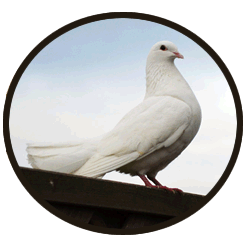
What Do Doves & Pigeons Look Like?
Doves and pigeons have plump bodies, small heads, and short legs! They're easily recognized by their distinctive shape and gentle appearance.
Mourning Doves - Most Common North American Dove:
- Slender, elegant birds
- 9-13 inches long, 4-6 ounces
- Tan/gray-brown with black spots on wings
- Long, pointed tail with white edges
- Soft cooing call sounds mournful (hence the name!)
- Fast fliers - up to 55 mph!
- Whistling wing sound during takeoff
Rock Pigeons (City Pigeons) - Worldwide Favorite:
- Sturdy, stocky build
- 11-14 inches long, 9-13 ounces
- Incredible color variety - gray, white, brown, black, iridescent greens and purples
- Most have two dark wing bars
- Iridescent neck feathers that shimmer
- similar to domesticated birds
- Found in cities worldwide!
White Doves - Symbols of Peace:
- Actually domesticated white rock pigeons or ringneck doves
- Pure white plumage
- Released at weddings and ceremonies
- Symbolize peace, love, and purity
- Not a wild species - bred for color
Exotic Species:
- Victoria Crowned Pigeon - Largest pigeon (4 pounds!), stunning blue-gray with lacy crest
- Fruit Doves - Brilliantly colored (green, orange, pink, purple)
- Diamond Dove - Tiny Australian dove with white spots
- Nicobar Pigeon - Closest living relative to extinct dodo bird!
All doves and pigeons share common features! Round, plump bodies help them stay warm. Small heads with small bills suited for seed eating. Short legs and feet designed for walking (they're ground feeders!). Most have iridescent feathers that shimmer with green, purple, or pink when light hits them!
Dove eyes are distinctive! Most species have bright red, orange, or yellow eyes. This eye color comes from pigments and makes their gaze striking! Baby doves have dark eyes that lighten as they mature.
Flight is powerful! Despite plump bodies, doves are strong, fast fliers. Mourning doves can reach 55 mph! Pigeons fly at sustained speeds of 50 mph. Their wings make whistling or clapping sounds during takeoff - useful for startling predators!
Where Do Doves & Pigeons Live?
Doves and pigeons live on every continent except Antarctica! They thrive in diverse habitats from cities to forests to deserts.
Rock pigeons love cities! Originally cliff-dwelling birds, they adapted perfectly to urban life. Buildings resemble cliffs to pigeons! They nest on window ledges, under bridges, and in building crevices. City pigeons are found worldwide - New York, London, Paris, Tokyo, everywhere! They're among the most successful urban birds!
Mourning doves prefer open country! They live across North America in fields, farms, suburbs, and open woodlands. Mourning doves avoid dense forests, preferring areas with scattered trees and open ground for feeding. They're among America's most abundant birds - over 350 million mourning doves in North America!
Many doves migrate! Mourning doves from northern areas fly south for winter. Some travel over 1,000 miles! Southern mourning doves stay year-round. Migration timing depends on food availability and temperature. Doves return north early in spring - often arriving before winter fully ends!
Tropical doves are stunning! Fruit doves live in rainforests of Southeast Asia, Australia, and Pacific islands. These colorful birds inhabit forest canopies, eating fruit and rarely coming to ground. Their bright colors camouflage them among tropical foliage and flowers!
Ground doves prefer open ground! These tiny doves live in warm regions - southern US, Central and South America, Africa, Australia. They walk on ground searching for seeds, only flying when startled. Ground doves inhabit grasslands, savannas, and agricultural areas.
Pigeons navigate amazingly! Rock pigeons use Earth's magnetic field to navigate. They also use landmarks, the sun's position, and even smell! Homing pigeons can find their way home from 1,000+ miles away. Scientists still don't fully understand how pigeons navigate so precisely!
Nesting sites vary! Doves build flimsy stick nests in trees, shrubs, building ledges, or even on the ground. Nests are so poorly constructed you can often see eggs through bottom! Despite appearing unstable, nests work perfectly for raising squabs (baby doves).
Some pigeons are endangered! The passenger pigeon once numbered in billions - flocks darkened skies for hours! Overhunting drove them extinct by 1914. Today, many island species face threats from habitat loss and introduced predators. Pink pigeons, Grenada doves, and others are critically endangered!
What Do Doves & Pigeons Eat?
Doves and pigeons are primarily seed eaters (granivores)! They also eat some fruits, berries, and occasionally insects.
Mourning doves eat:
- Seeds (98% of diet!)
- Grass seeds, weed seeds, grain
- Sunflower seeds (favorites at feeders!)
- Corn, wheat, millet
- Occasionally snails for calcium
- Small stones (grit) to help grind seeds
Rock pigeons eat:
- Seeds and grains
- Bread, popcorn, and human food scraps
- Berries and fruits
- Insects and worms (occasionally)
- Almost anything edible in cities!
Fruit doves eat:
- Fruits (primary diet)
- Figs, berries, tropical fruits
- They swallow fruits whole!
- Important seed dispersers in rainforests
Doves drink uniquely! Unlike most birds that scoop water and tilt heads back, doves suck water like using a straw! They submerge beaks and drink continuously without lifting heads. This is rare among birds - only pigeons, doves, sandgrouse, and a few others drink this way!
Crop storage is special! Doves have an enlarged crop (esophagus pouch) that stores seeds. A mourning dove can hold 17,000+ small seeds in its crop! They fill crops quickly at feeding sites, then fly to safe spots to digest. This reduces time exposed to predators!
How doves feed:
- Walk on ground picking up seeds with beaks
- Swallow seeds whole (no cracking with beaks)
- Seeds stored in crop
- Later, seeds move to gizzard (muscular stomach)
- Gizzard grinds seeds with swallowed grit/stones
- Ground seeds are digested in intestines
Doves need grit! Since they swallow seeds whole, doves need small stones and grit in their gizzards to grind food. They deliberately swallow pebbles! Grit acts like teeth, grinding tough seeds. Without grit, doves can't properly digest food!
Feeding behaviors vary! Mourning doves are crepuscular - most active at dawn and dusk. They visit feeders in flocks, loading up on seeds. Rock pigeons feed throughout the day in city squares and parks. Many doves are ground feeders, walking slowly while pecking seeds.
Salt requirements are important! Doves need more salt than many birds. They seek mineral-rich soils and visit salt licks. Coastal doves sometimes drink seawater! City pigeons get salt from human food scraps.
Baby Doves & Pigeons
Baby doves and pigeons are called squabs! Their development is fascinating and rapid.
Doves typically lay 2 eggs! Clutches almost always contain exactly two white eggs. Eggs are laid 1-2 days apart. Both parents share incubation duties - males sit during day, females at night! Incubation lasts 14-19 days depending on species.
Squabs hatch helpless! They're born blind, nearly naked (sparse yellow down), and completely dependent. Squabs are incredibly ugly compared to fluffy chicks of other birds! They look like tiny dinosaurs with oversized beaks and closed eyes!
Both parents feed squabs! For the first week, squabs eat only crop milk produced by both parents. Parents insert beaks into squabs' mouths and pump crop milk directly into them! After a week, parents gradually add regurgitated seeds mixed with crop milk. By two weeks, diet is mostly seeds.
Squabs grow incredibly fast! They reach adult size in just 2-3 weeks! This rapid growth requires enormous amounts of food. Parents feed squabs almost constantly. Squabs gain weight quickly, sometimes growing heavier than adults before fledging!
Development timeline:
- Day 1-7 - Blind, helpless, fed crop milk only
- Day 7 - Eyes open, pin feathers emerging
- Day 10-14 - Fully feathered, looking more like adults
- Day 14-16 - First flights (fledging)
- Day 21-28 - Fully independent
Fledging happens quickly! At only 2 weeks old, squabs leave nests and attempt first flights! They're not strong fliers initially - they flutter and crash frequently! Parents continue feeding fledglings for 1-2 more weeks while young birds practice flying and foraging.
Nests are reused! After squabs fledge, parent doves often reuse the same flimsy nest for another clutch! They add a few sticks and lay again. Some nests are used for multiple years and multiple broods! Old nests become crusty with droppings and feather debris!
Predators threaten squabs! Snakes, cats, hawks, owls, and crows prey on eggs and squabs. Ground nests are especially vulnerable. Mourning doves lose many nests to predators - which is why they produce so many broods yearly! High reproduction compensates for high mortality.
Young doves mature quickly! Mourning doves can breed at 3-4 months old! This rapid maturity combined with frequent breeding makes them highly successful despite short lifespans. It's a different strategy than long-lived, slow-reproducing birds!
Why Are Doves & Pigeons Special?
Doves and pigeons are designed with remarkable abilities! Their unique drinking method, incredible navigation, rapid reproduction, and gentle nature make them special. They've successfully adapted to diverse environments from wilderness to cities!
Doves serve important ecological roles! Seed dispersers spread plant species. Ground feeders clean up fallen seeds, reducing weed growth. Doves are prey for hawks, owls, and other predators, supporting food chains. City pigeons clean up food waste!
Doves benefit humans! Mourning doves are popular game birds providing food and recreation. Pigeons delivered messages before modern communication. Doves symbolize peace and love across cultures. Their gentle cooing brings peaceful ambiance to gardens and cities!
Conservation varies by species! Mourning doves and rock pigeons thrive - they're among the world's most successful birds! However, many island species are endangered. The dodo (a large pigeon) went extinct in the 1600s. Pink pigeons, Grenada doves, and others need protection from habitat loss and introduced predators!
Everyone can appreciate doves! Provide food - doves love millet, sunflower seeds, and cracked corn on ground feeders. Offer water sources. Plant seed-producing plants. Don't feed bread (it lacks nutrition!). Enjoy their peaceful cooing and graceful flight! Doves are gentle neighbors!