What Do Echinoderms Look Like?
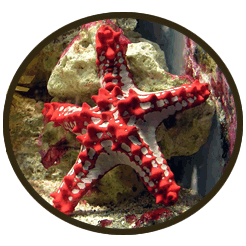
Echinoderms have unique body features that set them apart! All have radial symmetry - their body parts radiate from a center like spokes on a wheel. Most have five arms or sections, though some have more!
Echinoderm sizes vary! The smallest sea cucumbers are 0.4 inches long. The largest starfish can reach 6 feet across! Most are somewhere in between - hand-sized to basketball-sized.
Starfish (Sea Stars):
- Usually five arms radiating from central disc
- Some have 10, 20, or even 40 arms!
- Rough, bumpy skin covered in tiny spines
- Hundreds of tube feet on underside
- Bright colors: red, orange, purple, blue, or patterned
- Can regrow lost arms!
Sea Urchins:
- Round, spiny balls without visible arms
- Covered in long, sharp spines for protection
- Spines can be short and stubby or long and needle-like
- Mouth underneath with five teeth
- Move using spines and tube feet
- Colors: black, purple, red, green, or white
Sand Dollars:
- Flat, round, disc-shaped
- Covered in tiny spines (looks fuzzy when alive)
- Five-petal pattern on top
- Related to sea urchins but flattened
- Live buried in sand
- White skeletons wash up on beaches
Sea Cucumbers:
- Long, sausage-shaped bodies
- Soft and squishy (unlike other echinoderms)
- Tube feet along body
- Tentacles around mouth for feeding
- Can expel internal organs when threatened!
- Sizes range from tiny to 6 feet long
Brittle Stars:
- Look like starfish with super-long, thin, flexible arms
- Small central disc
- Arms break off easily (hence "brittle")
- Fastest-moving echinoderms
- Over 2,000 species!
All echinoderms have tube feet! These tiny, water-filled tubes act like suction cups. Echinoderms use tube feet to move, grip rocks, capture food, and breathe! Some starfish have 15,000 tube feet!
Where Do Echinoderms Live?
Echinoderms live in all the world's oceans! From shallow tidal pools to the deepest ocean trenches, you'll find echinoderms. They're exclusively marine - none live in freshwater or on land.
Starfish love rocky shores and coral reefs! They cling to rocks in tide pools where you can spot them at low tide. Some live on sandy bottoms. Others hide in coral reef crevices. Sunflower stars from the Pacific Northwest can have 24 arms and crawl surprisingly fast - up to 10 feet per minute!
Sea urchins prefer rocky areas! They wedge themselves into crevices for protection. Their spines defend against predators. Some urchins dig holes in rocks using their teeth! Purple sea urchins can live 50+ years in the same spot. Tropical urchins hide in coral during the day and come out at night to graze.
Sand dollars burrow in sandy beaches! They live partially buried, standing on edge. Waves wash plankton over them, which they filter for food. When they die, their skeletons bleach white and wash ashore. Finding a whole sand dollar is lucky - they're fragile!
Sea cucumbers carpet the ocean floor! Some live on sandy bottoms, others on rocky areas. Deep-sea cucumbers can be found 6 miles down in ocean trenches! They slowly crawl across the seafloor, vacuuming up organic matter. In some places, sea cucumbers are so numerous they cover the entire bottom!
Brittle stars hide in crevices! They tuck their flexible arms into tight spaces during the day. At night, they emerge to feed. Some deep-sea brittle stars live on the seafloor or perch on corals and sponges. Basket stars (a type of brittle star) have branching arms that look like underwater trees!
Some echinoderms live in extreme environments! Antarctic starfish survive freezing water. Deep-sea cucumbers handle crushing pressure. Hydrothermal vent sea cucumbers live near underwater volcanoes. Crown-of-thorns starfish can have 21 arms and eat coral - too many can damage reefs!
Echinoderms are found at all depths! From shallow tide pools you can wade in, to the very deepest parts of the ocean. The Mariana Trench (deepest spot on Earth) has sea cucumbers 7 miles down!
What Do Echinoderms Eat?
Echinoderms have diverse diets!
Starfish - Predators and scavengers:
- Eat clams, mussels, oysters, and snails
- Some hunt barnacles and small fish
- Crown-of-thorns starfish eat coral
- Many eat dead animals (scavengers)
- Have amazing eating method (see Cool Facts!)
Sea urchins - Grazers:
- Eat algae and seaweed
- Scrape algae off rocks with five teeth
- Some eat sponges and dead fish
- Can overgraze kelp forests if unchecked
- Sea otters eat urchins, keeping them balanced
Sand dollars - Filter feeders:
- Filter tiny plankton and organic particles from water
- Move food to mouth using cilia (tiny hairs)
- Also trap food particles in mucus
- Eat algae and detritus (dead organic matter)
Sea cucumbers - Vacuum cleaners:
- Eat sediment and organic matter from ocean floor
- Use tentacles to shovel sand into mouths
- Filter out nutrients, expel clean sand
- Some catch plankton with sticky tentacles
- They're the ocean's recyclers!
Brittle stars - Scavengers and filter feeders:
- Wave arms to catch drifting food particles
- Eat dead animals and organic debris
- Some catch small prey with arms
- Basket stars spread branching arms like nets to catch plankton
Starfish have a weird way of eating! When attacking a clam or mussel, they pull the shell open with their strong tube feet. Then the starfish pushes its stomach OUT through its mouth and INTO the shell! The stomach digests the prey outside the starfish's body. Then it pulls the stomach back in. Gross but effective!
Sea cucumbers are ocean janitors! They process huge amounts of sediment, cleaning the ocean floor. Some sea cucumbers eat continuously, filtering 15-20 pounds of sediment per year! They're crucial for nutrient recycling in ocean ecosystems.
Some starfish eat thousands of mussels! A single sunflower star can eat 8-10 sea urchins per week. Crown-of-thorns starfish can destroy coral reefs - one starfish eats 30 square feet of coral per year!
Baby Echinoderms
Echinoderms have fascinating life cycles!
Most echinoderms release eggs and sperm into water! Females release millions of eggs. Males release sperm clouds. Fertilization happens in open water. This is called spawning, and sometimes thousands of echinoderms spawn together!
Echinoderm babies don't look like adults! Fertilized eggs develop into tiny free-swimming larvae. These larvae look nothing like adult echinoderms - they're more like microscopic blobs with cilia (tiny hairs) for swimming. They drift in ocean currents for weeks or months!
Larvae eat plankton as they drift! During this time, they're part of the plankton themselves - zooplankton. Fish, jellyfish, and other animals eat most larvae. Only a tiny percentage survive to adulthood. This is why echinoderms produce millions of eggs!
Eventually, larvae transform! When ready, larvae settle to the ocean floor. They go through metamorphosis - completely reorganizing their bodies. They develop radial symmetry, grow tube feet, and begin looking like tiny adults. This transformation takes days to weeks.
Baby echinoderms start tiny! A newly settled baby sea urchin might be 0.04 inches across. Infant starfish are barely visible. They grow slowly, taking years to reach adult size. Sea urchins might take 5 years to grow large enough to reproduce.
Some echinoderms brood their young! Instead of releasing eggs into water, a few species hold eggs in protected pouches or under their bodies. Parents guard eggs until babies develop. This gives babies better survival chances but means fewer eggs overall.
Starfish can reproduce by splitting! Some species can split in half, with each half growing into a complete starfish. This is asexual reproduction - no eggs or sperm needed! Starfish also regenerate lost arms, sometimes creating extra starfish accidentally.
Growth continues for years! Echinoderms keep growing throughout their lives, though growth slows with age. A large sea urchin or starfish might be decades old. The oldest individuals are often the biggest!
Why Are Echinoderms Special?
Echinoderms are designed with unique adaptations! Their water vascular system, tube feet, incredible regeneration abilities, and five-part radial symmetry make them unlike any other animals. They've thrived since ancient times!
Echinoderms are crucial for ocean ecosystems! Sea urchins control algae growth. Starfish control shellfish populations. Sea cucumbers recycle nutrients from sediment. Without echinoderms, ocean ecosystems would be completely different!
Echinoderms help humans! People eat sea urchin roe (eggs) as a delicacy in many cultures. Scientists study echinoderm regeneration for medical research. Understanding how starfish regrow arms could help humans heal injuries! Echinoderm larvae are used in pollution testing.
Some echinoderms can be harmful! Crown-of-thorns starfish outbreaks can destroy coral reefs. Too many sea urchins can wipe out kelp forests. But these problems usually happen when ecosystems are out of balance (like when predators are removed).
Many echinoderm populations are threatened! Overharvesting sea cucumbers and sea urchins has depleted some species. Pollution and ocean warming affect all ocean life. Some starfish species have suffered from mysterious wasting diseases that dissolve their bodies!
Conservation protects echinoderms! Marine protected areas help populations recover. Sustainable harvesting prevents overfishing. Reducing ocean pollution helps all marine life. Everyone can help by supporting ocean conservation and choosing sustainable seafood!