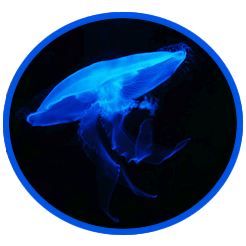
What Do Cnidarians Look Like?
All cnidarians have radial symmetry - their body parts radiate from a center like wheel spokes. They also all have special stinging cells called cnidocytes that give the group its name!
Cnidarian sizes range dramatically! The smallest are tiny hydras at 0.1 inches. The largest is the Lion's Mane Jellyfish with tentacles reaching 120 feet - longer than a blue whale!
Jellyfish:
- Bell or umbrella-shaped body
- Trailing tentacles with stinging cells
- 95% water (almost transparent!)
- No brain, bones, or heart
- Move by pulsing their bell
- Range from tiny to massive
Sea Anemones:
- Look like underwater flowers
- Tubular body anchored to rocks
- Crown of stinging tentacles
- Bright colors: pink, purple, red, orange, green
- Can retract tentacles when threatened
- Some move very slowly
Corals:
- Tiny polyps with tentacles
- Build hard calcium carbonate skeletons
- Live in colonies of thousands/millions
- Create massive reef structures
- Many colors from algae living in their tissues
- Soft corals don't have hard skeletons
Hydras:
- Tiny freshwater cnidarians
- Tubular body with tentacles at one end
- Can be 0.1-1.2 inches long
- Attach to plants or rocks
- Can regenerate entire bodies from pieces
Cnidarian stinging cells are amazing! Each cnidocyte contains a coiled, harpoon-like structure called a nematocyst. When triggered, the harpoon shoots out at incredible speed - one of nature's fastest movements! The harpoon pierces prey and injects venom. Humans can be stung too!
Many cnidarians glow in the dark! Bioluminescent jellyfish create their own light through chemical reactions. Some produce blue or green glows. This can startle predators or attract prey. It's one of nature's most beautiful displays!
Where Do Cnidarians Live?
Cnidarians live in all the world's oceans! From shallow tide pools to the deepest trenches, from tropical reefs to Arctic waters, cnidarians thrive everywhere. Most are marine, but hydras live in freshwater!
Jellyfish drift with ocean currents! Most jellyfish are planktonic - they can't swim strongly against currents. They pulse their bells to move up and down but drift sideways with water flow. Some jellies migrate vertically - deep during day, shallow at night!
Coral reefs are tropical treasures! Reef-building corals need warm, shallow, clear water with lots of sunlight. They thrive in tropical and subtropical oceans. The Great Barrier Reef off Australia is over 1,400 miles long - visible from space! Coral reefs are built by billions of tiny polyps working together over long periods of time.
Sea anemones prefer rocky areas! They anchor their bases to rocks, shells, or coral. Some bury in sand. Tide pool anemones survive exposure to air during low tide. Deep-sea anemones live on seafloors miles down. A few species attach to hermit crab shells and ride around!
Hydras live in freshwater! Unlike their ocean relatives, hydras inhabit ponds, lakes, and streams. They attach to plants or debris. Hydras are found worldwide in still or slow-moving freshwater.
Some jellyfish live in enclosed lakes! Jellyfish Lake in Palau has millions of golden jellyfish that lost their ability to sting strongly. They migrate daily across the lake following sunlight. It's a magical place for snorkeling!
Deep-sea cnidarians survive extreme conditions! Some jellyfish live in pitch-black trenches. Deep-sea corals grow in cold, dark water without sunlight. These corals don't have photosynthetic algae and rely entirely on catching food.
Box jellyfish prefer tropical coastal waters! These dangerous jellies swim in shallow waters around Australia and Indo-Pacific regions. They're strong swimmers (unlike most jellies) and hunt actively. Box jellies are among the most venomous animals on Earth!
What Do Cnidarians Eat?
All cnidarians are carnivores! They catch prey using their stinging tentacles.
Jellyfish eat:
- Small fish and fish larvae
- Plankton (tiny animals drifting in water)
- Other jellyfish (some are cannibals!)
- Shrimp and small crustaceans
- Larval forms of many sea animals
Sea anemones eat:
- Small fish that swim too close
- Shrimp and crabs
- Mussels and other shellfish
- Plankton and organic particles
- Anything their tentacles can catch!
Corals eat:
- Zooplankton caught at night
- Also get energy from algae (zooxanthellae) living in their tissues
- The algae photosynthesize, providing corals with food
- This partnership helps reefs grow
Hydras eat:
- Water fleas (daphnia)
- Tiny worms
- Insect larvae
- Other small aquatic organisms
Cnidarians use stinging tentacles to catch prey! When small animals touch tentacles, nematocysts fire. The prey is paralyzed by venom. Tentacles then move prey toward the mouth opening. The prey is digested in a simple stomach cavity, and waste exits through the same mouth opening!
Jellyfish are efficient hunters! Their tentacles dangle below the bell like a fishing net. Anything that touches tentacles gets stung. Large jellyfish can catch hundreds of small fish and plankton daily. Some jellies have tentacles covered in thousands of stinging cells!
Corals have a special partnership! Tiny algae called zooxanthellae live inside coral tissues. The algae photosynthesize using sunlight, producing sugars. Corals get up to 90% of their energy from these algae! In return, corals provide the algae with shelter and nutrients. It's teamwork!
Sea anemones are patient predators! They wave tentacles in currents, waiting for prey to drift by. When a fish touches tentacles - ZAP! Stinging cells fire, and the fish is paralyzed. Tentacles guide prey to the mouth. Large anemones can eat fish several inches long!
Some anemones have partners! Clownfish live among anemone tentacles without getting stung. They've developed immunity to the anemone's venom. The fish get protection from predators, and anemones get scraps from the clownfish's meals. It's a win-win relationship!
Baby Cnidarians
Cnidarians have fascinating life cycles! Many alternate between different body forms during their lives.
Most cnidarians start as free-swimming larvae! After fertilization, eggs develop into tiny planula larvae. These microscopic swimmers drift with currents for days or weeks. Planulae are covered in cilia (tiny hairs) that help them swim.
Jellyfish have complex life cycles! Planula larvae settle on the seafloor and transform into polyps (like tiny anemones). Polyps grow and eventually produce baby jellyfish through a process called strobilation. The polyp's body segments, and each segment becomes a baby jelly!
Baby jellies are called ephyrae! These tiny, star-shaped jellyfish are barely visible. They pulse away from the polyp and grow into adult jellyfish. This can take weeks or months. Some jellies reach adult size in a few months, others take years.
Corals reproduce in dramatic spawning events! Once or twice yearly, coral polyps release millions of eggs and sperm simultaneously. The water becomes a cloudy soup of coral gametes! Fertilized eggs develop into planulae that settle and grow into new coral polyps.
Sea anemones reproduce multiple ways! They can release eggs and sperm, or they can split in half (budding). Some anemones give birth to live young - baby anemones emerge from the parent's mouth! Others split lengthwise, creating identical twins.
Hydras bud off babies! A small bump grows on the parent's side. It develops tentacles and becomes a miniature hydra. Eventually, the baby detaches and lives independently. During good conditions, a hydra can produce several buds simultaneously!
Polyps can live for years! Jellyfish polyps attached to rocks can survive for years, producing batches of baby jellies regularly. This polyp stage is how jellies survive winter in cold climates - the adults die, but polyps endure.
Baby cnidarians face high mortality! Most planulae are eaten by fish or fail to find suitable settling spots. Out of millions of larvae, only a few survive to adulthood. This is why cnidarians produce so many offspring!
Why Are Cnidarians Special?
Cnidarians are designed with unique adaptations! Their simple body plan (no brain, bones, or complex organs), stinging cells, and ability to alternate between life stages make them unlike any other animals. They've existed since ancient times!
Cnidarians are crucial for ocean ecosystems! Coral reefs support 25% of all ocean species despite covering less than 1% of the seafloor. Jellyfish are important food for sea turtles, sunfish, and some seabirds. Anemones provide homes for clownfish and other small animals.
Cnidarians help humans! Coral reefs protect coastlines from storms and erosion. Reefs support fishing industries feeding millions of people. Scientists study cnidarian regeneration and immortality for medical insights. Jellyfish fluorescent proteins revolutionized biological research!
Some cnidarians are dangerous! Box jellyfish stings can kill humans in minutes. Portuguese Man O' War stings cause severe pain. Fire coral causes painful burns. But most cnidarians are harmless to humans or cause only mild irritation.
Many cnidarians face serious threats! Pollution can cause coral bleaching and reef death. Unusually warm water can also stress corals and make it harder for them to build their skeletons. Pollution harms all marine life. Overfishing disrupts reef ecosystems. Many coral species are endangered!
Everyone can help cnidarians! Support coral reef conservation. Keep beaches and oceans free of trash. Use reef-safe sunscreen (regular sunscreen harms corals). Don't touch or stand on coral when snorkeling. Support marine protected areas. Small actions protect these ancient animals!