What Do Flying Lemurs Look Like?
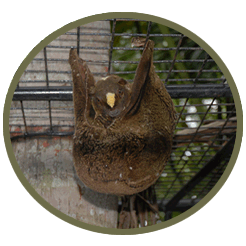
Flying lemurs (colugos) are medium-sized mammals about the size of a house cat! They have soft, thick fur that can be gray, brown, or reddish with white spots and patches. This mottled coloring helps them blend in with tree bark-it's perfect camouflage! They have large, forward-facing eyes that help them see well at night.
The most amazing feature of flying lemurs is their gliding membrane called a patagium! This skin flap connects all four limbs, stretches between their fingers and toes, and even includes their tail. When spread out, it looks like a large, square parachute! This membrane is the most extensive of any gliding mammal-it covers more of their body than any flying squirrel or sugar glider!
Flying lemurs have long, curved claws on their fingers and toes that help them grip tree bark. They have small heads with flat faces and short snouts. Their ears are small and rounded. They also have an unusual comb-like structure on their bottom teeth that they use for grooming their fur and scraping food. Everything about a flying lemur is designed for life in the trees!
Where Do Flying Lemurs Live?
Flying lemurs live only in Southeast Asia! There are just two species-the Sunda colugo and the Philippine colugo. The Sunda colugo lives in Malaysia, Indonesia, Thailand, and Singapore. The Philippine colugo is found only in the Philippines. Both species live in tropical rainforests and rubber tree plantations.
These tree-dwelling mammals spend almost their entire lives in the treetops! They rarely come down to the ground because they're awkward walkers. On the ground, they can only crawl slowly using their claws to pull themselves along. But in the trees, they're graceful acrobats!
Flying lemurs prefer tall trees in dense forests. They especially like areas with lots of big trees close together because this makes gliding easier. During the day, they rest clinging to tree trunks or hanging upside down from branches. At night, they become active, moving through the forest canopy searching for food.
What Do Flying Lemurs Eat?
Flying lemurs are herbivores that eat plants! They mainly eat young leaves, which are softer and easier to digest than older leaves. They also eat flowers, fruits, buds, and tree sap. Flying lemurs are very picky eaters and prefer the most nutritious, tender plant parts.
Here's how flying lemurs feed: They climb to feeding trees and use their strong claws to hang from branches. Then they reach out and pluck leaves or flowers with their mouth. They use their comb-like bottom teeth to scrape leaves off branches. Unlike many plant-eating animals, flying lemurs don't have very strong jaw muscles-they rely on their special teeth instead.
Flying lemurs have long digestive systems to help break down tough plant material. Plant leaves are hard to digest, so their food takes a long time to pass through their bodies. They need to eat large amounts of leaves to get enough nutrition. Flying lemurs spend several hours each night feeding in the treetops!
Baby Flying Lemur Facts
Baby flying lemurs are called pups, and they have an amazing childhood! Female flying lemurs are pregnant for about 60 days before giving birth. They usually have just one baby at a time. The mother gives birth while hanging from a tree branch!
Newborn colugos are tiny and helpless! They weigh only about 1.2 ounces-lighter than a tennis ball! Their eyes are closed, they have no fur, and they can't survive on their own. Baby flying lemurs are some of the most underdeveloped babies of any mammal-they need lots of care from their mother.
Here's the amazing part-the mother carries her baby in her gliding membrane! She can fold her patagium to create a warm, safe pouch where the baby rides. The baby clings to its mother's belly fur with its tiny claws. When mom glides through the forest, the baby goes along for the ride, safe inside her skin pouch!
Young flying lemurs stay with their mothers for about 6 months. During this time, they nurse and gradually develop fur and open their eyes. At around 2-3 months old, they start eating some solid food. By 6 months, young colugos can glide short distances on their own. They practice gliding skills while still staying close to mom. Eventually, they become independent gliders and find their own territories in the forest canopy!
Why Are Flying Lemurs Special?
Flying lemurs are extraordinary mammals with remarkable adaptations! Their extensive gliding membranes make them the best gliders in the mammal world. No other mammal can glide as far or as skillfully as a colugo. They show us how amazing specialized adaptations can be!
These gentle herbivores play important roles in tropical forest ecosystems. By eating leaves and flowers, they help control plant growth. When they move between trees, they can help spread seeds and pollen. Flying lemurs are also food for large predators like clouded leopards and eagles, making them part of the rainforest food web.
Flying lemurs face threats from habitat loss as tropical forests are cut down for logging and farming. However, they can sometimes adapt to living in rubber tree and coconut plantations if some natural forest remains nearby. Conservation efforts focus on protecting tropical forests to ensure these amazing gliders have homes.
These incredible mammals remind us of nature's creativity! Who would have thought of a mammal with a built-in parachute that can glide the length of a football field? Flying lemurs are proof that the natural world is full of surprises and wonders. They're truly remarkable creatures of the treetop world!