What Do Frogmouths Look Like?
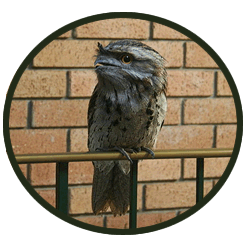
Frogmouths have wide, flat heads and enormous mouths! Their mouths stretch from ear to ear, just like a frog's mouth. That's how they got their name. Their bills are short but very wide and slightly hooked at the tip. Tufts of feathers called "whiskers" stick out around the base of the bill. These feathery whiskers help frogmouths feel insects in the dark!
The tawny frogmouth is the most well-known species! It lives all across Australia. Tawny frogmouths are about 14 to 21 inches long with mottled gray and brown feathers. Their coloring looks exactly like tree bark! When they close their eyes and point their beaks upward, they become almost invisible against a branch. Even birds watching from just a few feet away can miss them!
People often mistake frogmouths for owls, but they're quite different! Frogmouths have weak feet that can't grab prey like owl talons. Their eyes face forward but aren't as large as owl eyes. Frogmouths are more closely related to nightjars and swifts. There are 16 species of frogmouths across Australia, Southeast Asia, and the Pacific islands. The largest is the Papuan frogmouth, and the smallest are the Asian frogmouths!
Where Do Frogmouths Live?
Tawny frogmouths live throughout Australia! They're found in forests, woodlands, parks, and even suburban gardens. Frogmouths have adapted well to living near people. They sit on fence posts, rooftops, and garden trees during the day. Many Australians don't even know frogmouths are in their backyards because their camouflage is so good!
Other frogmouth species live across Southeast Asia! Sri Lanka frogmouths live in tropical forests of India and Sri Lanka. Javan frogmouths are found in Indonesia. Marbled frogmouths live in the rainforests of New Guinea and northern Australia. Most Asian frogmouths prefer dense, wet forests. They're much harder to spot than their Australian relatives!
Frogmouths prefer areas with large trees and open ground! They need sturdy branches for roosting during the day. They also need open spaces beneath the trees where they can hunt on the ground. Frogmouths don't build traditional nests. Instead, they make a flimsy platform of sticks in the fork of a tree branch. Some just lay eggs directly on a flat branch!
What Do Frogmouths Eat?
Frogmouths eat insects, spiders, and other small creatures! Moths, beetles, crickets, and cockroaches are their favorite foods. They also catch slugs, snails, worms, and centipedes. Larger frogmouths sometimes eat small frogs, lizards, and mice. Tawny frogmouths eat whatever small prey they can find on the ground or in the air!
Frogmouths hunt in a unique way! Instead of flying around looking for food like most birds, frogmouths sit still on a low perch and watch the ground. When they spot an insect or spider, they pounce down and grab it with their wide mouths. They snap their bills shut with a loud clap! Frogmouths also catch flying insects by opening their mouths wide like a net!
These birds hunt at night using their excellent hearing and eyesight! Frogmouths have large eyes that see well in dim light. Their sensitive ears detect tiny sounds made by crawling insects. Street lights attract moths and beetles, which brings frogmouths into suburban areas. Unfortunately, frogmouths sometimes fly toward car headlights while chasing bugs and get hit by vehicles!
Baby Frogmouth Facts
Frogmouth parents build a loose platform nest from sticks and leaves! The nest sits in the fork of a tree branch. It's so flimsy that you can sometimes see through it from below. Mother frogmouths lay 1 to 3 white eggs. Both parents take turns sitting on the eggs. The male usually sits during the day while the female sits at night!
Frogmouth eggs hatch after about 25 to 30 days! Baby frogmouths are covered in white, fluffy down. They look like little cotton balls sitting in the nest. As they grow, their downy fluff is replaced by bark-colored feathers. Even as babies, frogmouths practice their camouflage pose by stretching upward and staying still!
Both parents feed the chicks insects and other small prey! The parents catch food at night and bring it back to the nest. Chicks grow quickly and start getting their adult feathers within a few weeks. Young frogmouths stay in the nest for about 25 to 35 days. After leaving the nest, they stay near their parents for several more weeks!
Young frogmouths must learn good camouflage skills to survive! They practice freezing in place when danger comes near. At first, they're not as good at it as adults. Their fluffy baby feathers don't blend as well as adult plumage. But they learn quickly. By the time they're a few months old, young frogmouths are expert branch impersonators. They can live 10 to 14 years!
Why Are Frogmouths Special?
Frogmouths are living proof that camouflage is an amazing survival strategy! These birds don't need to be fast or powerful. They survive by being invisible. Their bark-like feathers are so effective that scientists sometimes struggle to count them in the wild. Frogmouths show us that staying hidden can be just as effective as running or fighting!
The tawny frogmouth is one of Australia's most beloved birds! Australians who discover frogmouths in their gardens are always delighted. These birds look grumpy and adorable at the same time. Their wide mouths give them a permanent frown that people find funny and cute. Frogmouths have become popular on social media for their silly expressions!
Frogmouths face threats from habitat loss and human activity! Car strikes are the leading cause of death for tawny frogmouths. They fly low across roads while chasing insects attracted to headlights. Cats also catch frogmouths roosting on low branches. People can help by driving carefully at night and keeping cats indoors!
These remarkable birds remind us that nature is full of surprises! A bird that disguises itself as a tree branch and catches bugs with a frog-sized mouth sounds like something from a storybook. But frogmouths are very real. Next time you walk past a tree in Australia or Southeast Asia, look carefully at the branches. That bump you see might just be a frogmouth watching you with one sleepy eye!