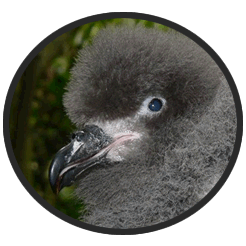
What Do Petrels Look Like?
Petrels come in a wide range of sizes! Storm petrels are some of the smallest seabirds, about the size of a sparrow. Giant petrels are nearly as big as albatrosses, with wingspans over 6 feet. Most petrels are dark gray, brown, black, or white. Many species have a mix of dark upper parts and white bellies that help them blend in with the ocean from above and below!
All petrels have tube-shaped nostrils on top of their bills! These special "tube noses" help them smell food across the vast ocean. They can detect the scent of fish oil and squid from several miles away. The tubes also help remove extra salt from seawater. Since petrels drink ocean water, they need a way to get rid of the salt. Their special glands filter it out through the tubes!
Petrels have long, narrow wings designed for gliding over waves! They use a flying technique called dynamic soaring-riding the wind just above wave crests to travel huge distances without flapping. Their webbed feet help with swimming and paddling on the surface. Storm petrels have especially long legs that dangle down, making them look like they're walking on water!
Where Do Petrels Live?
Petrels live on every ocean on Earth! Wilson's storm petrels are found across all the world's oceans and may be the most numerous wild bird on the planet. Giant petrels roam the Southern Ocean around Antarctica. Bermuda petrels live in the Atlantic Ocean. Many petrel species are found in the Pacific, from tropical islands to the cold waters near Alaska!
Petrels spend most of their lives at sea! Some species don't touch land for years at a time. They only come ashore to breed, and many nest on remote islands far from predators. Petrels often nest on islands that are so remote that humans rarely visit. During the rest of the year, they wander across thousands of miles of open ocean!
Petrel nesting colonies are usually on islands without land predators! They nest in burrows dug into the ground, in rock crevices, or under thick vegetation. Many petrels only visit their nests at night to avoid being caught by gulls and skuas. Some colonies contain millions of nesting pairs! The noise and smell of a large petrel colony can be detected from far away!
What Do Petrels Eat?
Petrels eat fish, squid, krill, and other ocean creatures! They hunt by skimming low over the water's surface, dipping their bills to grab food. Storm petrels patter their feet on the surface while hovering, picking up tiny fish and plankton. Larger petrels like fulmars can dive several feet underwater. Some petrels follow fishing boats to eat scraps thrown overboard!
Giant petrels are the vultures of the sea! They eat dead seals, whales, and penguins that wash up on shores. Their powerful bills can tear through tough skin. They also hunt live prey, attacking penguin chicks and injured seabirds. Giant petrels are the largest scavengers in the Southern Ocean. They play an important role in cleaning up dead animals!
Petrels have an amazing ability to smell food! Their tube noses can detect fish oils, squid ink, and the scent of krill from miles across the open water. Scientists have found that some petrels can even smell a chemical released by plankton when it's being eaten by krill. This means petrels can find food by smelling the ocean itself! Their sense of smell is unusual among birds!
Baby Petrel Facts
Most petrels lay just one white egg per year! They nest in burrows, rock cracks, or under vegetation on remote islands. Both parents take turns sitting on the egg. Incubation times are long-from about 40 days in small storm petrels to over 50 days in larger species. Petrel parents are very patient sitters!
Petrel chicks hatch covered in fluffy gray or white down! Both parents feed the chick by regurgitating a mix of fish, squid, and rich stomach oil. The parents may fly hundreds of miles to find food, leaving the chick alone for days at a time. The fat-rich stomach oil helps the chick gain weight quickly between feedings!
Baby petrels grow very slowly compared to land birds! Storm petrel chicks may stay in their burrow for 50 to 70 days before fledging. Larger petrel chicks stay even longer. As the chick grows, it sometimes becomes heavier than its parents! It uses this extra fat as fuel while developing its flight feathers. By the time it leaves, the chick has slimmed down!
When a young petrel leaves its burrow, it heads straight to the ocean! Most petrel chicks leave at night, waddling or fluttering to the nearest water. Once at sea, the young petrel is on its own. It must learn to find food, ride the winds, and survive ocean storms. Some petrel species don't return to land for two to five years after fledging!
Why Are Petrels Special?
Petrels are the true masters of the open ocean! No other group of birds is so perfectly suited for life far from land. They spend more time over water than any other birds. Petrels prove that incredible wildlife exists even in the most remote, empty-looking stretches of ocean!
Petrels are important indicators of ocean health! Because they travel so widely and eat from many parts of the food chain, changes in petrel populations can signal problems in the ocean. Pollution, overfishing, and plastic waste all affect petrels. Studying petrels helps scientists understand the health of our oceans!
Many petrel species are in danger! Island-nesting petrels are threatened by introduced rats, cats, and other predators. Light pollution disorients young petrels leaving their burrows. Plastic trash in the ocean is eaten by petrels who mistake it for food. Conservation groups are removing predators from nesting islands and reducing light pollution to help petrels survive!
Petrels connect us to the mystery and wonder of the open sea! These birds live in a world most humans never see-the vast, empty ocean far from any shore. They ride hurricanes, fly through fog, and navigate by smell across featureless water. Petrels remind us that the ocean is full of life and wonder!