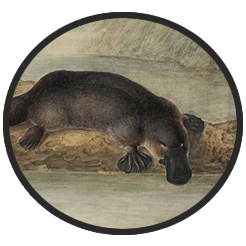
What Do Platypuses Look Like?
Platypuses have incredibly unique appearances combining features from different animals! They have duck-like bills-broad, flat, and leathery! The bill is soft and sensitive, not hard like bird beaks! Bills are dark brown or blackish. Platypus bodies are streamlined and covered in dense brown fur! Fur is waterproof-two layers trap air creating insulation. Belly fur is lighter-silver or gray colored. Platypuses have small eyes and no external ears!
Platypus tails are distinctive! Tails are flat, broad, and paddle-shaped like beaver tails! However, platypus tails are furry unlike naked beaver tails. Tails store up to 50% of body fat! This fat reserve helps platypuses survive when food is scarce. Tails also function as rudders when swimming! Platypuses have four webbed feet. Front feet have large webs extending beyond toes-excellent swimming paddles! When walking on land, webbing folds back exposing claws for digging!
Male platypuses have venomous spurs! Sharp hollow spurs on hind legs connect to venom glands! Males use spurs during mating season fighting over females. Platypus venom is not lethal to humans but causes severe pain! Swelling can last weeks or months. Females have spur buds but these fall off before maturity. Platypuses are one of only few venomous mammals! Males weigh 1.5 to 5.3 pounds while females weigh 1.3 to 3.5 pounds!
Where Do Platypuses Live?
Platypuses live only in eastern Australia and Tasmania! They inhabit freshwater rivers, streams, and lakes. Platypuses need clean, flowing water with suitable banks for burrowing! They prefer rivers with overhanging vegetation providing cover. Different platypus populations live in tropical rainforests, temperate forests, and alpine areas! Platypuses adapt to varied climates but always need permanent water!
Platypuses are semi-aquatic spending time in water and on land! They live in burrows dug into riverbanks! Burrow entrances are above water level-often hidden by vegetation or roots. Burrows have long tunnels extending 30 feet or more! Tunnels lead to dry chambers lined with vegetation. Platypuses build separate breeding burrows where females lay eggs and raise young! Breeding burrows have multiple chambers and elaborate construction!
Platypuses are solitary animals! They live and hunt alone except during brief mating season. Individual platypuses maintain home ranges along waterways. Ranges overlap but platypuses avoid each other! They are primarily nocturnal and crepuscular-active at night, dawn, and dusk. Platypuses rest in burrows during midday! They are excellent swimmers spending hours daily hunting underwater!
What Do Platypuses Eat?
Platypuses are carnivores eating aquatic invertebrates! They hunt insect larvae, freshwater shrimp, crayfish, and worms. Platypuses also eat fish eggs and small fish! They forage along river bottoms probing mud and sediment with sensitive bills! Platypuses close eyes, ears, and nostrils when diving-hunting completely by touch and electroreception! They detect electrical signals produced by prey muscle movements!
Platypuses have no teeth! Adults are toothless-young have teeth that fall out! Instead, platypuses have horny grinding plates! They scoop prey into cheek pouches along with gravel and mud! After surfacing, platypuses grind food between plates using gravel as grinding aid! This unusual feeding method is unique to platypuses. They eat enormous amounts-consuming food equaling half their body weight daily!
Foraging behavior is intensive! Platypuses hunt for 10 to 12 hours daily! They make repeated dives lasting 30 seconds to 2 minutes. Between dives, platypuses surface briefly to breathe! Successful hunting requires highly sensitive bills and electroreception. Platypuses swing bills side-to-side detecting prey electrical signals! This remarkable hunting ability allows platypuses to hunt in complete darkness or murky water!
Baby Platypus (Puggle) Facts
Mother platypuses prepare for eggs carefully! Females dig elaborate breeding burrows with multiple chambers. They line chambers with wet vegetation creating humid environments! After mating, females lay 1 to 3 small, leathery eggs! Eggs are only half an inch in diameter-smaller than chicken eggs. Mothers curl around eggs holding them between tail and body! Incubation lasts about 10 days. Mothers leave burrows briefly to feed but stay mostly with eggs!
Baby platypuses called puggles hatch tiny and helpless! They are about an inch long-blind, hairless, and completely dependent! Puggles stay in burrows nursing for 3 to 4 months! Mother platypuses do not have nipples. Instead, milk oozes from pores in abdominal skin! Puggles lick milk from mother's fur. This unusual nursing method is unique to monotremes! Mothers leave burrows to hunt-sealing entrances with soil protecting puggles from predators!
Young platypuses develop slowly! Eyes open at 11 weeks old. Fur starts growing around the same time! At 4 months old, young platypuses emerge from burrows exploring rivers! They learn swimming and hunting by watching mothers. Young platypuses become independent at 4 to 5 months old! They reach sexual maturity at 2 to 3 years old. Platypuses live 10 to 17 years in wild!
Many challenges face young platypuses! Water rats, snakes, and birds of prey hunt puggles! Flooding can drown entire litters in burrows. Drought makes food scarce! Many young platypuses do not survive their first year. However, those reaching adulthood face fewer threats! Adult platypuses have few natural predators. Humans pose biggest threats through habitat destruction and pollution!
Why Are Platypuses Important?
Platypuses are indicator species signaling ecosystem health! They need clean, flowing water with abundant invertebrate prey. Platypus presence indicates healthy river ecosystems! Declining platypus populations warn of pollution or habitat degradation. Monitoring platypuses helps scientists assess waterway health! Protecting platypuses means protecting entire river systems benefiting countless species!
These bizarre animals contribute to scientific knowledge! Platypuses helped scientists understand mammal diversity and reproductive strategies! Their venom contains unique compounds studied for medical applications! Electroreception research advances understanding of sensory systems. Studying platypuses reveals how animals adapt to unique ecological niches! They demonstrate that mammals are more diverse than previously thought!
Platypuses hold cultural significance! They are iconic Australian animals appearing on coins and symbols! Platypuses inspire wonder and curiosity-their bizarre features fascinate people worldwide! They symbolize Australia's unique wildlife! Platypuses feature in Aboriginal stories and modern conservation campaigns. Their quirky appearance makes them beloved ambassador species encouraging broader wildlife conservation!
These remarkable creatures reveal the Creator's design! Platypuses were created with incredible combinations of features perfectly designed for semi-aquatic life-waterproof fur, webbed feet, and paddle tails! Their electroreception enables hunting without sight in murky water. Venomous spurs provide males defensive weapons! The unique egg-laying-yet-milk-producing reproduction demonstrates diversity in mammal design. Platypuses' bizarre characteristics show the Creator's creativity designing animals with unexpected combinations of abilities! Every platypus feature points to the Creator who made animals wonderfully diverse and perfectly adapted to their environments. Platypuses remind us that the Creator designed animals with amazing variety!