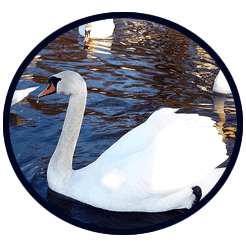
What Do Swans Look Like?
Swans are BIG birds! They're among the largest flying birds in the world. An adult swan can weigh over 30 pounds - that's as heavy as a medium-sized dog! They can be over 5 feet long from beak to tail.
Most swans are pure white! Mute Swans, Trumpeter Swans, and Whooper Swans all have snowy white feathers. Their white color makes them look elegant and easy to spot on water. Young swans (cygnets) start out gray-brown and turn white as they grow up.
Not all swans are white though! Black Swans from Australia are covered in black feathers with bright red beaks. Black-necked Swans from South America have white bodies and black necks. They're just as beautiful as white swans!
Swans have incredibly long necks! A swan's neck can have 25 vertebrae - more than almost any other bird! This long neck helps them reach underwater plants that other birds can't reach. They can dip their heads deep under water while their bodies float on top.
Their feet are webbed like ducks! Swans have large webbed feet that work like paddles, pushing them through water. On land, these big feet make swans waddle a bit awkwardly. They're much more graceful in water!
Swan beaks are special! Most swans have orange or red beaks with a black tip. Mute Swans have a distinctive black knob on top of their orange beak. This knob gets bigger during breeding season!
Where Do Swans Live?
Swans live in many parts of the world! Different types of swans live in North America, Europe, Asia, and Australia. They're found everywhere except Africa and Antarctica.
Trumpeter Swans and Tundra Swans live in North America! Trumpeter Swans are the biggest - they can weigh over 30 pounds! Tundra Swans migrate long distances, spending winters in coastal areas and summers in the Arctic.
Mute Swans originally came from Europe! Now they live in Europe, parts of Asia, and have been brought to North America and other places. Despite their name, they're not totally silent - they hiss, grunt, and make snorting sounds!
Black Swans are native to Australia! They're the only swans that live naturally in the Southern Hemisphere. Black Swans love lakes, rivers, and wetlands across Australia.
Swans need water to survive! They live on lakes, ponds, rivers, and coastal areas. Swans prefer calm, shallow water where they can find plants to eat. They need space to take off and land because they're so heavy.
Some swans migrate, others don't! Tundra Swans fly thousands of miles between summer and winter homes. But Mute Swans often stay in the same area all year if there's enough food and the water doesn't freeze completely.
What Do Swans Eat?
Swans are mostly herbivores! They eat aquatic plants and vegetation. They're sometimes called "grazing birds" because they graze on plants like cows graze on grass.
What's on a swan's menu?
- Underwater plants and algae
- Water lily roots and stems
- Pondweed and algae
- Grass and grain on land
- Seeds from water plants
- Sometimes small fish, insects, and frogs
Swans use a special feeding method called "dabbling"! They tip forward in the water, sticking their long necks down to reach plants on the bottom. Their tail feathers stick up in the air while they eat underwater. It looks funny but it works great!
A swan can eat several pounds of plants each day! They spend up to half their day feeding. In cold weather, they need even more food to stay warm and energized.
Swans sometimes graze on land too! You might see swans walking on grass near lakes, eating like geese. They prefer eating in water, but they'll come on land for young grass and grain.
Baby swans eat more insects and small animals! Cygnets need protein to grow fast, so they eat more insects, tadpoles, and tiny fish than adults. As they grow, they switch to eating more plants.
Baby Swans
Baby swans are called cygnets (say: SIG-nets). They're fluffy and adorable! When they first hatch, cygnets are covered in soft gray or brown down feathers. They don't look much like their elegant parents yet!
Swan parents work together! Both mom and dad help build the nest, which can be huge - up to 6 feet across! They pile up plants, reeds, and sticks near the water. The same pair often uses the same nest site year after year, just adding more materials.
Mom swan lays 3 to 8 eggs! She sits on the eggs for about 35 to 40 days, keeping them warm. Dad (called a cob) guards the nest and brings food to mom. He's very protective and will chase away any intruders!
Cygnets can swim right away! Within a day or two of hatching, baby swans follow their parents into the water. They're not waterproof yet though, so they stay close to their parents and often ride on their backs.
Both parents take care of the cygnets! They teach the babies where to find food, how to stay safe, and protect them from predators like foxes, eagles, and large fish. Parents are super protective - they'll attack anything that threatens their babies!
Young swans grow slowly! It takes about 4-6 months before cygnets can fly. They stay with their parents through their first winter. By the next spring, when their parents are ready to have new babies, the young swans leave to find their own territories.
Cygnets gradually turn white! If they're going to be white swans, their gray-brown baby feathers slowly turn white over their first year. By age 2-3, they have full adult plumage and are ready to find their own mate.
Why Are Swans Special?
Swans are designed with amazing grace and strength! They combine beauty and power in a unique way. Their long necks, strong wings, and elegant appearance make them one of nature's most recognizable birds.
Swans are important for wetland ecosystems! By eating water plants, they help control plant growth and keep waterways healthy. Their droppings provide nutrients for other creatures. They're an important part of the food web.
These birds remind us to appreciate nature's beauty! Watching swans glide peacefully across a lake is calming and inspiring. Their loyalty to their mates shows us that strong family bonds exist in the animal world too.
Swans teach us that being graceful doesn't mean being weak! Despite their gentle appearance, swans are powerful, protective birds that deserve our respect and space.