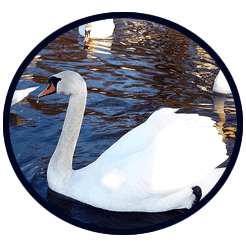
Bird Group

Waterfowl Facts for Kids

Waterfowl are swimming birds with webbed feet and waterproof feathers. Meet ducks, geese, and swans, the birds that paddle on ponds and lakes!

Quick Waterfowl Facts

Special feet
Webbed feet for paddling
Stay-dry trick
Waterproof feathers and an oil gland
How many kinds?
About 170 species
What they eat
Water plants, seeds, small fish, and insects
Where they live
Lakes, rivers, ponds, and oceans
Amazing journey
Many migrate thousands of miles
Waterfowl

Waterfowl are swimming birds designed with webbed feet and waterproof feathers. This group includes ducks, geese, and swans found on lakes, rivers, ponds, and oceans around the world. Waterfowl have flat bills, dense feathers that shed water, and special oil glands that help keep them warm and dry.

There are about 170 species of waterfowl and many migrate long distances between breeding and wintering areas. These birds eat water plants, seeds, small fish, and insects by dabbling at the surface or diving underwater. Waterfowl are excellent swimmers and many species are also strong fliers that can travel thousands of miles during migration.

Meet the Waterfowl

Tap an animal to learn more. Geese are waterfowl too!

Cool Facts About Waterfowl!

  • Their feathers never get soaked! Waterfowl spread oil from a special gland over their feathers so water rolls right off, like a raincoat.
  • Webbed feet are built-in paddles! The skin between their toes pushes against the water to help them swim fast.
  • Ducklings follow the first thing they see! Newly hatched ducklings bond with their mother right away and waddle after her in a line.
  • Swans can be very big! Some swans have wings that stretch wider than a grown person is tall.
  • Many fly in a V shape! Geese fly in a V so each bird drafts behind the one ahead, which saves energy on long trips.

Waterfowl Questions Kids Ask

What is a waterfowl?

A waterfowl is a swimming bird with webbed feet and waterproof feathers, such as a duck, goose, or swan.

Why do not waterfowl get cold and wet?

They have thick, oily, waterproof feathers that shed water, plus a layer of soft down underneath to keep them warm.

How do waterfowl swim so well?

Their feet have skin stretched between the toes, making natural paddles that push them through the water.

Do waterfowl travel far?

Yes! Many waterfowl migrate, flying thousands of miles between their summer and winter homes.