What Did Tasmanian Tigers Look Like?
Tasmanian tigers had a dog-like body with a stiff tail and striped back! They were about the size of a medium-large dog. Their sandy-brown or yellowish-brown fur had 13 to 21 dark brown or black stripes across the back, rump, and base of the tail. These stripes gave them the "tiger" nickname. Their heads were large with a long snout and pointed ears. They had powerful jaws!
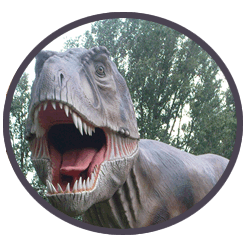
One of the thylacine's most amazing features was its jaw! It could open its mouth to a jaw gape of nearly 80 degrees-wider than almost any other mammal. A dog can only open about 40 degrees. This incredible gape let the thylacine grab large prey. Despite looking like a dog, the thylacine was built differently. Its body was stiffer and its tail was thick at the base!
Female thylacines had a backward-opening pouch! Like kangaroos, thylacines were marsupials that carried their babies in pouches. But the thylacine's pouch opened toward the rear, not the front. The pouch could hold up to four babies at a time. Both males and females had a pouch-like skin fold, but only females had a true pouch for carrying young!
Where Did Tasmanian Tigers Live?
By the time Europeans arrived in Australia, thylacines lived only on the island of Tasmania! Long ago, they also lived across mainland Australia and even New Guinea. They disappeared from the mainland thousands of years ago, possibly due to competition with dingoes (wild dogs). Tasmania had no dingoes, so thylacines survived there much longer!
Thylacines preferred open woodlands and grasslands in Tasmania! They hunted in scrubby areas, forest edges, and coastal heaths. They were mostly active at night and during dawn and dusk. During the day, thylacines rested in dense bush, hollow logs, or rocky outcrops. They needed large territories with plenty of prey animals like wallabies and possums!
European settlers changed Tasmania dramatically! Forests were cleared for farms. Sheep were introduced across the landscape. When thylacines occasionally killed sheep, farmers and the government declared war on them. A bounty was placed on thylacines-hunters were paid for every one they killed. Between 1888 and 1909, over 2,000 bounties were paid. This hunting, combined with habitat loss and disease, pushed thylacines to extinction!
What Did Tasmanian Tigers Eat?
Thylacines were carnivores that hunted small to medium-sized animals! Their main prey included wallabies, possums, bandicoots, and small kangaroos. They also ate birds, lizards, and other small animals. Thylacines hunted alone or in pairs, stalking their prey through the bush. They were not fast runners but were persistent hunters that tired out their prey!
Thylacines had a unique hunting style! They didn't chase prey at high speed like wolves or dogs. Instead, they followed their prey with a steady, tireless trot. The thylacine would keep following until the prey animal became exhausted. Then it would move in for the kill. This "pursuit hunting" style worked well in the scrubby landscape of Tasmania!
Scientists have studied thylacine skulls to understand their bite! Their jaws were strong enough to catch and hold struggling prey. The wide jaw gape let them take large bites. However, their bite force was not as strong as a similar-sized dog's. Thylacines were designed more for grabbing and holding prey than for crushing bones. They probably ate most of an animal, including the soft organs!
Baby Tasmanian Tiger Facts
Thylacine mothers gave birth to tiny, undeveloped babies like all marsupials! Newborns were very small-about the size of a grain of rice. They crawled into their mother's backward-facing pouch immediately after birth. Inside the warm pouch, babies attached to a milk teat and continued developing. Up to four babies could fit in the pouch at once!
Baby thylacines stayed in the pouch for about 3 months! During this time, they grew from tiny, jellybean-sized newborns into furry miniature versions of their parents. When they first poked their heads out, they already had their striped pattern. The pouch protected them from cold, rain, and the bumps of their mother's hunting trips!
After leaving the pouch, young thylacines stayed close to their mother! She may have left them in a den or hiding spot while she hunted. As they grew, the young probably followed their mother and learned hunting skills by watching her. Young thylacines were vulnerable to eagles, large snakes, and other predators during this time!
Thylacines probably became independent at about 9 to 12 months old! They needed to learn their territory, find prey, and avoid danger on their own. In the wild, thylacines may have lived 5 to 7 years. In zoos, some lived longer. The short lifespan and small litter sizes made it hard for thylacine populations to recover once their numbers dropped!
Why Are Tasmanian Tigers Special?
The thylacine is one of the saddest extinction stories of modern times! Unlike dinosaurs or mammoths, the thylacine disappeared because of deliberate human action. People hunted them, destroyed their habitat, and drove them to extinction within just a few decades. The thylacine reminds us of the damage humans can do to wildlife!
Thylacines were unique among the world's mammals! They were the largest meat-eating marsupial in modern times. Their combination of dog-like body, tiger stripes, and kangaroo pouch made them unlike anything else alive. No other animal filled quite the same role in its ecosystem. When thylacines vanished, Australia lost its last large marsupial predator!
The thylacine has become a powerful conservation symbol in Australia! Its image appears on the Tasmanian coat of arms, license plates, and countless logos. The thylacine represents what can be lost when we don't protect wildlife. Many Australians feel a deep responsibility to prevent other unique species from following the same path!
The story of the thylacine gives us hope and a warning! Scientists working on de-extinction show that we haven't given up on lost species. But the best approach is to protect animals before they're gone. Tasmania now has strong wildlife protection laws. The thylacine's ghost reminds us to value and protect the amazing animals that still share our world!
Cool Facts About Tasmanian Tiger!
- Not a tiger, not a wolf: The thylacine was called both "Tasmanian tiger" (for its stripes) and "Tasmanian wolf" (for its dog-like shape). But it wasn't related to either! It was a marsupial-a pouched mammal. The thylacine looked like a dog because both filled similar roles as medium-sized predators. Similar lifestyles can produce similar body shapes even in unrelated animals!
- World's widest jaw: Thylacines could open their mouths to nearly 80 degrees! That's almost twice as wide as a dog's gape. Old photographs show thylacines with their jaws opened at what looks like an impossible angle. This super-wide mouth helped them grab large prey. It's one of the most remarkable features of any mammal that has ever lived!
- Backward pouch: Female thylacines had a pouch that opened toward the rear! Most marsupial pouches face forward (like kangaroos) or downward. Scientists think the backward-opening pouch protected babies from brush and branches as the mother ran through thick scrub. Baby thylacines spent about 3 months in the pouch before coming out!
- Last one died in 1936: The last known thylacine died at the Hobart Zoo in Tasmania on September 7, 1936. His name was Benjamin (though this name was given later). Tragically, just two months before Benjamin died, the Tasmanian government finally gave thylacines legal protection. It was too late. Benjamin is one of the most famous extinct animals in history!
- Real film footage exists: Unlike most extinct animals, we have actual video footage of living thylacines! Several short films were made at zoos in the early 1900s. These black-and-white clips show thylacines pacing in their enclosures, yawning (showing their amazing jaw gape), and interacting with keepers. It's eerie and sad to watch the last of a species on film!
- Sightings still reported: Despite being declared extinct, people in Tasmania still report thylacine sightings! Hundreds of claimed sightings have been made since 1936. However, no confirmed evidence has been found-no clear photographs, no DNA, no bodies. Most scientists believe the thylacine is truly gone. But the mystery of possible survivors keeps people searching!
- De-extinction research: Scientists are studying thylacine DNA to see if the species could be brought back! Preserved thylacine specimens in museums contain DNA. Researchers are trying to piece together the complete genome. Some scientists hope to use this DNA to create thylacine-like animals using related marsupials as surrogate mothers. It's one of the most ambitious de-extinction projects!
- Designed as a marsupial hunter: The thylacine was perfectly suited for its role as Australia's top marsupial predator! Its striped camouflage hid it in dappled bush light. Its wide jaw caught prey effectively. Its stiff tail provided balance while running. Its endurance hunting style matched its prey. The thylacine shows how marsupials can fill the same roles as placental mammals!