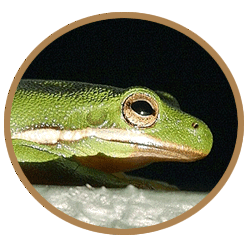
What Do Tree Frogs Look Like?
Tree frogs come in amazing colors and patterns! The American green tree frog is bright lime green with a white or yellow stripe. Red-eyed tree frogs have vibrant green bodies, blue-striped sides, orange feet, and huge red eyes! White's tree frogs are chunky and pale green or blue-green. Gray tree frogs can change from gray to green to brown depending on their surroundings. Some tropical tree frogs have bright warning colors-poison dart frogs are technically tree frogs too!
These frogs have special features for climbing! Tree frogs have large, bulging eyes that give them excellent vision for catching insects. Their bodies are usually slender and lightweight-perfect for climbing. The most amazing feature is their toe pads! Each toe has a round, sticky pad covered in tiny hexagonal cells. These pads work like suction cups and sticky tape combined, allowing tree frogs to cling to almost any surface. Some tree frogs also have extra cartilage between their toes that acts like webbing for gliding!
Tree frog sizes vary a lot by species! The smallest tree frogs are less than half an inch long-tinier than a penny! The Cuban tree frog can grow to 5 inches-about the size of your hand. Most tree frogs are 1 to 3 inches long. Males are usually smaller than females. Despite their small size, tree frogs have huge toe pads and fingers compared to their bodies. Their skin is smooth and moist, and they must keep it wet to breathe through it!
Where Do Tree Frogs Live?
Tree frogs live on every continent except Antarctica! They are found in North America, South America, Europe, Asia, Africa, and Australia. Different species prefer different habitats. American green tree frogs live in wetlands and forests in the southeastern United States. Red-eyed tree frogs inhabit tropical rainforests in Central America. White's tree frogs live in northern Australia and Indonesia. Some tree frogs even live in deserts, hiding in vegetation near water sources!
Most tree frogs spend their lives in trees and plants! They rest on leaves, branches, and tree trunks during the day. Their colors help them blend in with green leaves or brown bark. Tree frogs are most active at night when they hunt for insects. Some tree frogs live near ponds, streams, or swamps and move between water and trees. Others live high in rainforest canopies and rarely come down! A few species have adapted to live near human homes, hiding in plants and calling loudly at night!
Tree frogs need water to breed! When it is time to reproduce, tree frogs travel to ponds, puddles, or even water-filled tree holes. Males call loudly to attract females. After mating, females lay their eggs in water or on leaves overhanging water. The eggs hatch into tadpoles that drop or wiggle into the water below. Some rainforest tree frogs lay eggs in bromeliad plants or bamboo stems that hold water. This gives their tadpoles safe nurseries away from predators!
What Do Tree Frogs Eat?
Tree frogs are carnivores that eat insects and other small invertebrates! Their diet includes flies, moths, mosquitoes, crickets, beetles, ants, and spiders. Tree frogs are ambush predators-they sit very still and wait for prey to come close. When an insect lands nearby, the frog shoots out its sticky tongue faster than you can blink! The tongue catches the prey and pulls it back into the frog's mouth. The whole capture takes less than a second!
These frogs have amazing hunting adaptations! Tree frogs have excellent eyesight and can spot tiny moving insects from far away. They track prey by moving their eyes independently like chameleons. Once the prey is in range, tree frogs use their long, sticky tongues to catch it. The tongue is attached at the front of the mouth and flips out lightning-fast! Tree frogs can catch insects in mid-flight. They also have no teeth, so they swallow their food whole!
Tree frog appetites vary by size! Small tree frogs eat dozens of tiny insects every night. Larger species like the Cuban tree frog eat bigger prey including smaller frogs, lizards, and even small snakes! Tree frogs must eat regularly to survive. During cold weather or dry seasons, some tree frogs slow down their metabolism and eat less. In rainforests where food is abundant year-round, tree frogs stay active and eat constantly!
Baby Tree Frog Facts
Tree frog breeding usually happens in spring and summer! Males gather near water and begin calling to attract females. Their choruses can be deafening-hundreds of males calling at once! When a female approaches, the male climbs on her back in a position called amplexus. The female carries the male to a good egg-laying spot. She releases eggs while the male fertilizes them externally. Different species lay anywhere from 10 to 3,000 eggs!
Tree frog eggs develop quickly! The eggs are covered in protective jelly and usually stick to leaves, plants, or float in water. Depending on temperature, eggs hatch in 2 to 14 days. The tiny tadpoles that emerge look nothing like adult frogs! They have long tails, no legs, and breathe through gills. Tree frog tadpoles that hatch on leaves must drop or wiggle into water below. Those that miss the water dry out and die!
Tadpole life is dangerous and exciting! Tree frog tadpoles eat algae, plant matter, and tiny organisms. They swim by wiggling their tails. Tadpoles face many predators-fish, birds, dragonfly larvae, and even other tadpoles! Development time varies by species-some tadpoles transform in 2 weeks while others take 3 months. During metamorphosis, tadpoles grow legs, absorb their tails, develop lungs, and change their digestive systems. Their mouths transform from round algae-scrapers to wide insect-catchers!
Newly transformed froglets are miniature versions of adults! They are usually less than half an inch long when they first leave the water. Young tree frogs immediately start climbing and hunting tiny insects. Their toe pads work right away! Young frogs grow quickly when food is plentiful. They shed their skin regularly as they grow-about once a week! Tree frogs reach breeding size at 1 to 3 years old depending on the species. In captivity with consistent food and temperature, tree frogs often live longer than in the wild!
Why Are Tree Frogs Important?
Tree frogs help control insect populations! A single tree frog eats hundreds of insects every week. By catching mosquitoes, flies, and other pests, tree frogs help keep insect numbers balanced. This benefits farmers by reducing crop pests and helps people by lowering mosquito populations. Tree frogs are also food for snakes, birds, small mammals, and larger frogs. They play important roles in food webs, transferring energy from insects to predators!
These amphibians are indicator species for environmental health! Tree frogs have permeable skin that absorbs water and oxygen-but also pollutants. They are sensitive to water quality, air quality, and habitat changes. When tree frog populations decline, it often signals environmental problems. Scientists monitor tree frog populations to track ecosystem health. Healthy tree frog populations usually mean healthy forests and wetlands!
Tree frogs inspire scientific research and biomimicry! Scientists study tree frog toe pads to develop new adhesives for medical use and robotics. Tree frog skin secretions have led to discoveries of antibiotics and painkillers. Researchers examine how freeze-tolerant tree frogs survive to improve organ preservation techniques. The ability of some tree frogs to change color interests materials scientists. Every tree frog species may contain unique compounds valuable for medicine and technology!
These remarkable creatures reveal the Creator's brilliant design! Tree frogs were perfectly designed with sticky toe pads for climbing, color-changing skin for camouflage, and freeze tolerance for survival. Their ability to live in trees yet breed in water shows incredible adaptation. The variety of tree frog species-from tiny spring peepers to large White's tree frogs-demonstrates the creativity built into creation. Every tree frog call echoing through the forest at night reminds us that the Creator filled Earth with amazing, diverse, and wonderfully designed life!