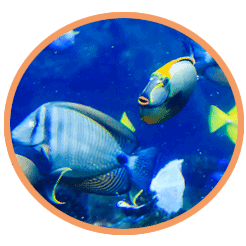
What Do Tropical Fish Look Like?
Tropical fish are the most colorful fish in the world! They come in every color you can imagine-bright blue, neon yellow, electric orange, deep purple, and vivid green. Many tropical fish have bold stripes, spots, or patterns. The mandarin fish is covered in swirling blue, orange, and green designs. Clownfish are orange with white stripes. Angelfish have tall, flat bodies with dramatic patterns!
Tropical fish come in amazingly different shapes! Butterflyfish are flat and round like a pancake. Eels are long and snake-like. Seahorses swim upright and have horse-shaped heads. Pufferfish can inflate into a spiny ball. Lionfish have flowing, fan-like fins that spread like a mane. Boxfish are shaped like little cubes. The variety of tropical fish shapes is endless!
Many tropical fish have special features for survival! Parrotfish have beaks for crunching coral. Trumpetfish are long and thin for hiding among sea fans. Surgeonfish have razor-sharp spines near their tails. Stonefish are so perfectly camouflaged they look exactly like rocks. Flashlight fish have light-producing organs under their eyes. Each species has features perfectly suited to its way of life!
Where Do Tropical Fish Live?
Most tropical fish live in warm waters near the equator! The richest tropical fish habitats are coral reefs. The Coral Triangle in Southeast Asia has the most species of tropical fish anywhere-over 3,000 species! The Great Barrier Reef in Australia is home to over 1,500 species. Caribbean reefs, Hawaiian reefs, and Indian Ocean reefs all support incredible fish communities!
Coral reefs are like underwater cities! Different fish live in different parts of the reef. Small fish hide among the coral branches. Larger fish patrol the reef edges. Some fish live in sandy areas near the reef. Others hover above the reef in open water. Each fish has its own territory and preferred spot. A single reef can support hundreds of species, all sharing the same underwater neighborhood!
Tropical fish also live in freshwater rivers and lakes! The Amazon River is home to over 3,000 freshwater fish species, including piranhas, tetras, and discus fish. African great lakes have hundreds of colorful cichlid species. Southeast Asian rivers have bettas, gouramis, and rasboras. Tropical freshwater fish are just as colorful and interesting as their saltwater relatives!
What Do Tropical Fish Eat?
Tropical fish eat many different things! Herbivorous fish like parrotfish and surgeonfish eat algae that grows on coral and rocks. Carnivorous fish like groupers and barracudas eat smaller fish. Butterflyfish use their long snouts to pick tiny creatures from coral crevices. Clownfish eat algae and small shrimp. Many tropical fish are omnivores that eat whatever they can find!
Some tropical fish have very unusual diets! Parrotfish actually eat coral, crunching it with their beak-like teeth and digesting the algae inside. The ground-up coral comes out as sand-one parrotfish can produce 200 pounds of sand per year! Cleaner wrasses eat parasites off the bodies of larger fish. Archerfish shoot jets of water at insects above the surface, knocking them into the water to eat!
Feeding time on a coral reef is carefully organized! Many fish feed at specific times of day. Some fish feed during the day and hide at night. Others come out only at night to hunt. This schedule means different species use the same reef at different times, reducing competition. Dawn and dusk are the busiest feeding times, when both day and night fish are active!
Baby Tropical Fish Facts
Tropical fish reproduce in many different ways! Most fish release eggs and sperm into the water, where fertilization happens outside the body. Clownfish lay eggs on flat surfaces near their anemone home. Seahorse fathers carry the eggs in a special pouch! Some tropical fish, like guppies and mollies, give birth to live babies. Each species has its own unique approach to having babies!
Many tropical fish are devoted parents! Male clownfish guard their eggs, fanning them with their fins to keep them clean and oxygenated. Cichlid parents hold eggs in their mouths for protection-they don't eat until the babies hatch! Seahorse fathers give birth to hundreds of tiny babies at once. Discus fish produce a special skin mucus that their babies eat like milk!
Baby tropical fish face many dangers! Most fish eggs and babies are eaten by other fish. Some species produce thousands of tiny eggs to ensure a few survive. Baby fish that hatch from eggs start as tiny larvae that drift in the ocean currents. They gradually develop into miniature versions of their parents. Baby fish that survive their first few weeks grow quickly!
Young tropical fish often look different from adults! Many juvenile fish have different colors and patterns than their parents. This different coloring may protect them from being attacked by territorial adult fish. Young angelfish have completely different patterns than adults. As they grow, their colors gradually change to match adult fish. Watching a tropical fish grow and change colors is fascinating!
Why Are Tropical Fish Special?
Tropical fish create some of the most beautiful underwater scenes on Earth! Coral reefs teeming with colorful fish are among nature's greatest wonders. Snorkeling or diving on a healthy reef is like entering a different world full of color and movement. Tropical fish inspire art, photography, and a love of the ocean!
Tropical fish are essential for coral reef health! Herbivorous fish keep algae in check. Predatory fish maintain healthy population balances. Cleaner fish keep other fish free of parasites. Every species plays a role in the complex reef ecosystem. When fish populations decline, the whole reef suffers!
Coral reefs and their fish face serious threats! Rising ocean temperatures cause coral bleaching, destroying fish habitat. Ocean pollution, overfishing, and destructive fishing practices damage reefs worldwide. About 25 percent of the world's coral reefs have already been seriously damaged. Protecting oceans is essential for the survival of tropical fish and the reefs they call home!
Tropical fish bring joy to people around the world! Over 10 million households keep tropical fish as pets. Aquariums let people experience the beauty of reef fish up close. The tropical fish hobby has inspired many people to care about ocean conservation. These beautiful, fascinating fish remind us that the underwater world is worth protecting for future generations!