What Do Clownfish Look Like?
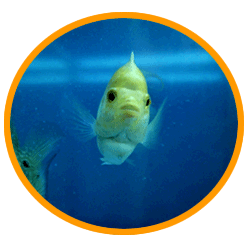
Clownfish are easily recognized by their bright orange bodies with bold white stripes! Most clownfish have two or three wide white bands bordered by thin black lines running across their bodies. This striking pattern makes them stand out on the colorful coral reef. Not all clownfish are orange though-some species are yellow, red, or even black with white stripes! The patterns help clownfish recognize members of their own species and tell each other apart.
These little fish have rounded bodies and small fins designed for life among the reef! Clownfish are not built for speed like sharks or tuna. Instead, their body shape lets them dart quickly in and out of their anemone homes. Their fins move in a waddle-like swimming motion that looks funny and cute! Clownfish grow to about 2 to 5 inches long depending on the species. The females are much larger than the males-sometimes twice as big!
Clownfish have a special protective coating on their skin! This mucus layer keeps them safe from the stinging cells on sea anemone tentacles. Scientists think clownfish slowly get used to the anemone's sting by touching it gently at first. Over time, they build up immunity and can swim freely through the tentacles. The anemone's mucus may also rub off on the clownfish, disguising it as part of the anemone itself!
Where Do Clownfish Live?
Clownfish make their homes in warm tropical waters of the Pacific and Indian Oceans! They live in coral reefs near places like Australia, Indonesia, the Philippines, and the coast of Africa. Clownfish prefer shallow water where sunlight reaches the reef and keeps the water warm. You will find them swimming among the corals in waters usually less than 50 feet deep. They need warm water between 75 and 80 degrees to survive!
Every clownfish lives with a sea anemone partner! Clownfish cannot survive long without their anemone homes. The fish rarely swim more than a few feet away from their anemone. If danger approaches, they dash back to hide among the protective tentacles. Different clownfish species prefer different types of anemones. There are over 1,000 species of sea anemones, but clownfish only live with about 10 specific kinds!
Clownfish stay in the same small area their whole lives! Unlike fish that migrate across oceans, clownfish are homebodies. Once a young clownfish finds an anemone to live in, it usually stays there forever. Even when scientists moved clownfish to new locations, many of them tried to swim back home! This makes clownfish very vulnerable to habitat destruction-if their reef is damaged, they have nowhere else to go.
What Do Clownfish Eat?
Clownfish eat a variety of small foods from their reef neighborhood! They munch on tiny algae growing on rocks and corals. They eat zooplankton-microscopic animals floating in the water. Clownfish also snack on small worms, shrimp, and fish eggs. Sometimes they nibble on parasites living on their anemone partner, helping to keep it clean and healthy. Clownfish are not picky eaters!
These fish help feed their anemone homes too! Clownfish drop food scraps and waste near the anemone's mouth. The anemone eats these leftovers for extra nutrition. Clownfish also lure other small fish close to the anemone by swimming out and acting like easy prey. When the unsuspecting fish gets too close-ZAP! The anemone stings and eats it. The clownfish then gets to share the meal. This teamwork helps both the fish and the anemone survive!
Clownfish use their excellent eyesight to find food! They can see colors very well, which helps them spot tasty morsels against the colorful reef background. Clownfish usually feed during the day when light makes it easier to see. They dart out from their anemone, grab a quick bite, and rush back to safety. At night, clownfish rest among the anemone tentacles, protected from nighttime predators!
Baby Clownfish Facts
Baby clownfish start life as tiny transparent larvae! When they first hatch from their orange eggs, clownfish babies are only a few millimeters long. They are so small and see-through that you can barely see them in the water! The larvae have big eyes and no stripes yet. They drift in the ocean currents, eating even tinier plankton to survive. This is the most dangerous time in a clownfish's life!
The larvae drift for about 1 to 2 weeks before settling down! During this time, they may travel many miles from where they hatched. Eventually, the young fish feel the urge to return to a coral reef. They can detect the sounds and smells of the reef from far away. When they reach the reef, they search desperately for a sea anemone to live in. If they cannot find one, they will not survive!
Finding a home is a big challenge for baby clownfish! All the best anemones usually have clownfish families already living in them. The young fish must search for an empty anemone or convince an existing group to let them join. When a baby finds an anemone, it carefully touches the tentacles to build up immunity to the stings. This process takes a few hours. Once immune, the baby can hide safely in its new home!
Young clownfish grow their beautiful stripes as they mature! The white bands appear in a specific order. The first stripe shows up behind the head, then the tail stripe, and finally the middle stripe. Not all species get three stripes-some only have one or two! The young fish remain small males at first. They grow slowly while living in the anemone and feeding on plankton and algae. It takes about a year before they are ready to breed!
Why Are Clownfish Important?
Clownfish play an important role in keeping coral reefs healthy! They help control populations of small invertebrates and keep algae from overgrowing the reef. By bringing food to their anemone partners, clownfish help these animals grow stronger. Healthy anemones provide shelter for many other small reef creatures. The mutualistic relationship between clownfish and anemones shows how different species depend on each other in ocean ecosystems!
Clownfish help scientists understand how marine animals communicate and cooperate! Researchers study clownfish social groups to learn about dominance, gender change, and partnerships in the ocean. Because clownfish stay in one place their whole lives, scientists can easily track individual fish over many years. Studies of clownfish have taught us about how fish navigate using smell and sound. This knowledge helps protect other marine species too!
These cheerful fish inspire people to care about ocean conservation! The popularity of clownfish through movies and aquariums has made millions of people interested in marine life. When people learn about clownfish, they also learn about the importance of protecting coral reefs from pollution and overfishing. Healthy reefs need healthy clownfish, and healthy clownfish need healthy reefs. Protecting one means protecting the other!
Clownfish remind us of the Creator's wonderful design! These small fish were perfectly designed with special mucus to live among deadly anemone tentacles. Their partnership with anemones shows incredible wisdom in creation. The ability of clownfish to change gender, communicate with sounds, and navigate the vast ocean proves these animals are far more complex than people once thought. Every detail-from their bright warning colors to their devoted parenting-reveals purposeful design!