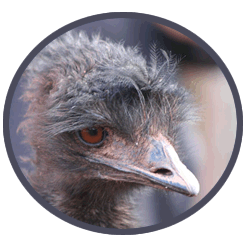
What Do Emus Look Like?
Emus are huge birds that stand 5-6.5 feet tall-about as tall as an adult human! They're the largest birds in Australia and the second-largest in the world. Only ostriches are bigger! Emus have long necks, small heads, and large bodies covered in soft, shaggy feathers.
Emu feathers are unusual-they're double-shafted, meaning each feather has two quills! This gives them their fluffy, hairy appearance. Their feathers are grayish-brown or tan, perfect camouflage in the Australian bush. During hot weather, the feathers can fluff up to help keep emus cool, and in cold weather, they lie flat to keep warmth in.
Emus have powerful, muscular legs with three toes on each foot. Their legs are incredibly strong-one kick from an emu can seriously hurt a predator! They have small, useless wings hidden under their feathers that can't be used for flying. Emus have large, brown eyes and excellent eyesight. They also have soft, blue skin on their faces and necks that shows through their sparse feathers!
Where Do Emus Live?
Emus are found only in Australia! They live throughout most of the Australian continent except for rainforests and very dry desert areas. Emus prefer open habitats like grasslands, scrublands, eucalyptus forests, and lightly wooded areas. They're very adaptable and can survive in many different environments!
These wandering birds don't stay in one place! Emus are nomadic, meaning they travel from area to area searching for food and water. They might walk 15-25 miles in a single day! In dry seasons, emus migrate toward areas with more rainfall and food. In wetter seasons, they spread out across the landscape.
Emus are excellent swimmers and don't mind getting wet! They'll wade through rivers and even swim across when necessary. They also love taking baths in water to cool down and clean their feathers. On hot days, you might see emus panting with their beaks open to cool off!
What Do Emus Eat?
Emus are omnivores that eat both plants and animals! They're not picky eaters and will sample almost anything edible. Their diet includes grass, seeds, fruits, flowers, young shoots, and leaves. They especially love caterpillars, grasshoppers, beetles, and other insects!
Here's something interesting-emus swallow stones and pebbles! These stones stay in their gizzard (a muscular part of their stomach) and help grind up tough plant material. The stones act like built-in food processors! Emus also eat charcoal from burnt trees, which might help with digestion.
Emus can go for days without eating when food is scarce! They store fat in their bodies during times when food is plentiful, then use that stored energy when food is hard to find. They can also survive without drinking water for several days, getting moisture from the plants they eat.
Baby Emu Facts
Baby emus are called chicks, and they have amazing striped patterns! During breeding season, female emus lay 5-15 large, dark green eggs in a simple ground nest. The eggs are huge-each one weighs about a pound! The beautiful dark green color is unusual and distinctive.
After laying the eggs, the mother emu leaves! The father takes over all parenting duties. He sits on the nest for about 8 weeks, protecting and incubating the eggs. During this time, the devoted dad barely eats or drinks and can lose up to 20 pounds! He only leaves the nest occasionally for quick drinks of water.
When emu chicks hatch, they're already quite developed! They're covered in cream-colored down with brown stripes running down their backs and sides. These stripes provide excellent camouflage in the grass. Within hours of hatching, the chicks can stand and walk!
The father emu stays with and protects his chicks for 5-7 months! He teaches them how to find food and avoid predators. The chicks grow quickly-by 12-14 months old, they're nearly adult size. Their striped pattern gradually fades as they mature, and their adult feathers grow in. Young emus stay together in groups even after leaving their father!
Why Are Emus Special?
Emus are extraordinary birds that show us amazing adaptations! Though they can't fly, their powerful running legs make them perfectly suited for life on the ground. They're designed to thrive in Australia's diverse landscapes, from dry outback areas to coastal regions.
These remarkable birds play important roles in Australian ecosystems! As they travel and eat, emus spread seeds across huge distances, helping plants grow in new areas. They control insect populations by eating grasshoppers and other bugs. Emus are like gardeners and pest controllers rolled into one!
Emus are an iconic symbol of Australia! They appear on Australia's coat of arms alongside the kangaroo, representing the nation's spirit. Aboriginal Australians have respected and hunted emus for thousands of years, using their meat, eggs, fat, and feathers. Emus are deeply connected to Australian culture and history.
These fascinating flightless birds remind us that not all birds need to fly to be successful! Emus have thrived in Australia for ages by running fast, being adaptable, and working with their environment. They're wonderful examples of how nature creates perfect solutions for different challenges!