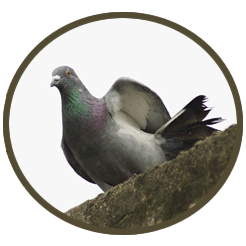
What Do Pigeons Look Like?
City pigeons come in a rainbow of colors! The classic rock pigeon has a blue-gray body, two black wing bars, and a shimmering green and purple neck. But city pigeons come in dozens of color patterns-white, brown, checkered, red, black, and spotted. All these colors come from centuries of breeding by humans. No two city pigeons look exactly alike!
Pigeons have compact, strong bodies built for flying! They have small heads that bob back and forth as they walk. This head-bobbing helps them see better-each bob gives them a steady view of the world. Pigeons have strong chest muscles that make up about one-third of their body weight. Their wings beat about 10 times per second during flight!
Pigeon eyes are amazing! They can see almost 360 degrees around them without turning their heads. Pigeons can see ultraviolet light that humans can't detect. Their eyes process images faster than human eyes, which is why pigeons seem to fly so confidently through tight spaces. They can even tell the difference between paintings by different artists!
Where Do Pigeons Live?
Pigeons live in cities and towns all around the world! Rock pigeons originally lived on sea cliffs and rocky ledges in Europe, North Africa, and western Asia. When humans built cities with tall buildings and bridges, pigeons moved right in. Window ledges, rooftops, and bridge beams are just like their natural cliff habitats. Today, city pigeons live on every continent except Antarctica!
Pigeons are some of the most successful urban animals! They thrive in cities because buildings provide shelter and people provide food. Pigeons are not bothered by noise, crowds, or traffic. They nest on building ledges year-round. Some cities have millions of pigeons. Venice, New York, London, and Mumbai all have huge pigeon populations!
Wild rock pigeons still live on natural cliffs around the world! They nest on sea cliffs in Scotland, Ireland, and Mediterranean islands. These wild birds are shyer than their city cousins. Feral pigeons (escaped domestic pigeons gone wild) also live in farm areas, roosting in barns and grain silos. Wherever there are people and buildings, pigeons are usually nearby!
What Do Pigeons Eat?
Pigeons eat mainly seeds and grains! In the wild, they eat grass seeds, berries, and grain from farm fields. City pigeons eat bread crumbs, popcorn, french fries, and whatever food people drop or offer. They're not picky eaters! Pigeons peck at food on the ground, picking up seeds one at a time with their bills!
Pigeons drink water in an unusual way! Most birds scoop up water and tilt their heads back to let it run down their throats. Pigeons are one of the few birds that can suck water up like drinking through a straw. They dip their bills in water and pump it straight into their stomachs. This lets them drink much faster than other birds!
Both pigeon parents feed their babies something special called crop milk! This thick, creamy substance is made in a pouch in the parent's throat called a crop. Crop milk is packed with protein and fat-more nutritious than cow's milk! Both the mother and father produce crop milk. Pigeons are one of the few birds where both parents make this special baby food!
Baby Pigeon Facts
Pigeon nests are simple platforms made of twigs and straw! The male brings materials and the female arranges them on a ledge. City pigeons nest on building ledges, windowsills, under bridges, and in parking garages. The nest looks messy and flat-just a loose pile of sticks. Pigeons can nest any time of year, though spring and summer are most common!
Mother pigeons usually lay 2 white eggs per clutch! Both parents sit on the eggs. The father sits during the day, and the mother takes the night shift. The eggs hatch in about 17 to 19 days. Pigeon parents are very dedicated and rarely leave the eggs unattended. They can raise many broods per year-sometimes up to 8!
Baby pigeons are called squabs! They hatch naked, blind, and helpless. Squabs grow very quickly on the rich crop milk their parents produce. By two weeks old, they're covered in feathers. Baby pigeons stay in the nest for 4 to 6 weeks-much longer than most birds. This is why you almost never see baby pigeons in the city!
Young pigeons look different from adults when they first leave the nest! They have duller colors, darker eyes, and no shiny neck feathers. Young pigeons learn to fly by fluttering around the nest area. They follow their parents to learn where to find food and water. Within a few months, young pigeons look just like adults and can start raising their own families!
Why Are Pigeons Special?
Pigeons are one of the most successful animal species on Earth! They live on every continent except Antarctica. They thrive in the biggest, busiest cities alongside billions of humans. Pigeons have adapted to modern life better than almost any other wild animal. Their success story is remarkable!
Pigeons have an incredible relationship with humans! For thousands of years, they've carried our messages, served in our wars, fed our families, and lived on our buildings. No other bird has been so closely connected to human civilization. Pigeons and people have been partners for longer than recorded history!
Scientists study pigeons to understand animal intelligence and navigation! Research on pigeon brains has helped scientists understand how animals learn and remember. Pigeon navigation studies may lead to better GPS technology. Even medical researchers study pigeons to learn about diseases. These common birds have taught us extraordinary things!
Pigeons deserve more respect than they usually get! People often call them "flying rats," but pigeons are athletic, intelligent, loyal, and beautiful birds. They navigate better than any technology, fly faster than highway traffic, and have served humanity faithfully for thousands of years. Next time you see a pigeon, remember-you're looking at one of nature's most remarkable birds!