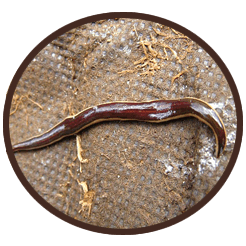
What Do Flatworms Look Like?
Flatworms are exactly what their name says-flat! They have soft, ribbon-like bodies with no hard parts at all. Free-living flatworms come in many sizes, from tiny planarians less than an inch long to marine flatworms several inches across. Many marine flatworms are stunningly beautiful, with bright colors like electric blue, hot pink, orange, and purple with bold patterns!
Flatworms are some of the simplest animals with a head end and a tail end! Planarians have a triangle-shaped head with two eye spots that look like they're cross-eyed. These eye spots can detect light but don't see images. Flatworms have no skeleton, no lungs, and no circulatory system. They're so thin that oxygen passes right through their body! Their flat shape is the key to how they breathe!
Parasitic flatworms look very different from free-living ones! Tapeworms are long, ribbon-like parasites that live inside other animals' intestines. Some tapeworms can grow over 60 feet long! Flukes are smaller parasitic flatworms with sucker-like mouths. Parasitic flatworms don't need eyes or many organs-they absorb nutrients directly from their host's body!
Where Do Flatworms Live?
Flatworms live almost everywhere on Earth! Free-living flatworms are found in oceans, freshwater ponds, streams, and lakes. Marine flatworms glide across coral reefs and ocean floors. Freshwater planarians live under rocks in streams and ponds. Some flatworms live on land in moist tropical forests. They need moisture because they breathe through their skin!
Marine flatworms are found in tropical and temperate oceans worldwide! They live on coral reefs, rocky shores, and seagrass beds. Many marine flatworms are active at night, hiding under rocks during the day. Some species live in very specific habitats-certain flatworms are found only on particular types of coral or sponge. The most colorful species live in tropical Indo-Pacific waters!
Parasitic flatworms live inside other animals! Tapeworms live in the intestines of mammals, birds, and fish. Liver flukes live in the bile ducts of animals. Blood flukes live in blood vessels. Parasitic flatworms have complex life cycles that often involve multiple host animals. They can be found in animals on every continent. Some parasitic flatworms affect millions of people worldwide!
What Do Flatworms Eat?
Free-living flatworms are hunters and scavengers! Planarians eat tiny water organisms, dead animal matter, and other small creatures. They have a mouth on the underside of their body that extends a tube-like throat called a pharynx to suck up food. Marine flatworms eat tiny sea creatures, including small crustaceans and fish eggs. Some flatworms eat other flatworms!
Planarians have an unusual way of eating! Their mouth is located in the middle of their belly, not on their head. When they find food, they extend their pharynx out of their mouth like a tiny vacuum cleaner hose. They suck up their meal and digest it in a branched gut that reaches throughout their body. Since they're so flat, they don't need blood vessels-food gets to all their cells directly!
Parasitic flatworms don't hunt at all! Tapeworms absorb pre-digested food directly through their skin from their host's intestines. They don't even have a mouth or digestive system! Flukes attach to their host's organs with suckers and feed on blood and tissue. Parasitic flatworms get all their nutrition from the animals they live inside. It's a free meal-but at the host's expense!
Baby Flatworm Facts
Free-living flatworms reproduce in two different ways! Many planarians can reproduce by simply splitting in half-the back end holds on to a surface while the front end pulls away. Each half then regenerates the missing parts. This is called fission. Flatworms can also reproduce by laying eggs. Both methods produce complete new flatworms!
Many flatworms are hermaphrodites-each worm has both male and female parts! When two flatworms meet, they can both contribute eggs and receive them at the same time. This means every flatworm can potentially produce offspring. Marine flatworms lay clusters of tiny eggs on rocks and coral. The eggs hatch into tiny worms that look like miniature adults!
Parasitic flatworms have incredibly complex life cycles! A tapeworm egg might be eaten by a small animal, hatch inside it, then wait until a larger predator eats that animal. Once inside the final host, the tapeworm matures and produces millions of eggs. Some parasitic flatworm life cycles involve three or four different host animals! It's an amazingly complex journey from egg to adult!
Baby flatworms grow quickly and can start reproducing at a young age! Planarians can reach full size in just a few weeks. Marine flatworm larvae develop from eggs in days to weeks. Parasitic flatworms may take longer to mature, depending on their life cycle. Since planarians can also reproduce by splitting, a single flatworm can produce an entire population all by itself!
Why Are Flatworms Special?
Flatworms are superstars of regeneration science! Their ability to regrow entire body parts, including their brain, fascinates scientists around the world. By studying how planarians regenerate, scientists hope to learn how to help human tissues heal better. Flatworm research could lead to breakthroughs in medicine and wound healing!
Flatworms play important roles in their ecosystems! Free-living flatworms help break down dead organisms in water and soil. They're food for fish, insects, and other predators. Marine flatworms help control populations of small reef creatures. Even parasitic flatworms play a role by helping regulate animal populations in the wild!
Some parasitic flatworms cause serious health problems! Schistosomiasis, caused by blood flukes, affects over 200 million people worldwide. Tapeworm infections can occur from eating undercooked meat. Scientists work hard to develop treatments and prevention for parasitic flatworm diseases. Clean water and proper food preparation are the best defenses!
Flatworms remind us that even simple-looking animals can have extraordinary abilities! A tiny worm that can regrow its head, store memories throughout its body, and potentially live forever is more amazing than most science fiction. These flat, humble creatures have taught us enormous amounts about biology and continue to surprise scientists with new discoveries!