What Do Mousebirds Look Like?
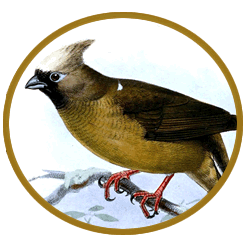
Mousebirds are small, soft-feathered birds with very long tails! Their tails are longer than their bodies, making up about half their total length. They have small, rounded bodies covered in soft, fluffy plumage that looks almost fur-like. Most mousebirds are gray or brown with crested heads. The speckled mousebird has fine speckles on its chest. The blue-naped mousebird has a bright blue patch on the back of its head!
Mousebirds have one of the most flexible foot designs of any bird! They can rotate all four toes to face forward, or arrange them in any combination. This gives them an incredible grip that lets them hang in any position-right-side up, upside down, or sideways. Their feet work more like hands than typical bird feet. This is why they can scurry through thick bushes with such ease!
Mousebirds have short, stubby bills with a slightly curved upper part! Their bills are designed for eating fruit, leaves, and flowers. They have crested heads that they raise when excited or alarmed. Their eyes are surrounded by bare, colored skin-often red or blue. Mousebirds look cuddly and scruffy, like tiny feathered mice with crests!
Where Do Mousebirds Live?
Mousebirds live only in sub-Saharan Africa! The speckled mousebird is the most widespread, found from East Africa to southern Africa. The red-faced mousebird lives in southern Africa. The blue-naped mousebird is found in East Africa. White-backed and white-headed mousebirds live in different parts of central and eastern Africa. All six species are found nowhere else!
Mousebirds prefer bushes, thickets, and garden hedges! They love dense, shrubby areas where they can scurry through the branches. They're common in suburban gardens, orchards, and woodland edges. Mousebirds avoid thick forests and open grasslands. They need areas with plenty of fruit-bearing bushes and shrubs. Many Africans see mousebirds in their gardens daily!
Mousebirds are very social and almost never seen alone! They live in groups of 4 to 20 birds. The group stays together all day, feeding, resting, and grooming each other. At night, they huddle together in a tight cluster to stay warm. Mousebirds are rarely more than a few feet apart from their companions. Solitary mousebirds are usually sick or lost!
What Do Mousebirds Eat?
Mousebirds eat fruit, leaves, buds, flowers, and nectar! They're mostly vegetarian birds. They eat a wide variety of garden and wild fruits, including berries, figs, and cultivated fruits. Mousebirds also eat young leaves and flower buds. They sometimes eat insects, but plants make up the vast majority of their diet!
Mousebirds can be pest birds for fruit farmers! They descend on orchards and gardens in groups, eating fruit and damaging crops. A flock of mousebirds can strip a fruit tree surprisingly fast. They eat far more than their tiny size would suggest. Despite being considered pests, mousebirds also eat many wild fruits and help spread seeds of native plants!
Mousebirds have a special digestive system for their plant-heavy diet! They have a large crop (throat pouch) for storing food. Their digestive system processes plant material efficiently. Mousebirds spend a lot of time sunbathing after eating, which may help them digest their food better. They hang with their bellies facing the sun, absorbing warmth to aid digestion!
Baby Mousebird Facts
Mousebirds build small, messy nests of twigs, leaves, and grass! The nests are cup-shaped and hidden in dense bushes or thorny shrubs. Both parents build the nest together. The nest is usually well-hidden among thick foliage. Sometimes other group members help with nest-building. Mousebird nests are simple but effective!
Female mousebirds lay 2 to 4 white or cream-colored eggs! Both parents take turns sitting on the eggs. Other group members may also help keep the eggs warm. Incubation lasts about 11 to 14 days-shorter than many birds of similar size. The whole group participates in the breeding effort, making mousebirds cooperative breeders!
Baby mousebirds hatch with some down but are mostly helpless! Both parents and helper birds feed the chicks. Baby mousebirds are fed regurgitated fruit and plant material. The chicks grow fast and can leave the nest at about 10 to 14 days old. Even after leaving the nest, the young birds stay close to the family group!
Young mousebirds join the social group right away! They learn to find food by following the adults. Young birds are fed by multiple group members, not just their parents. They start sunbathing and huddling with the group immediately. Young mousebirds become fully independent at about 4 to 5 weeks old but often stay with their family group for months or even permanently!
Why Are Mousebirds Special?
Mousebirds are truly unique among the world's birds! They belong to an ancient order with no close living relatives. Their flexible all-direction toes, mouse-like climbing, and group huddling behavior are found in no other bird family. Mousebirds are one of a kind!
Mousebirds show us how important social behavior is for survival! These tiny birds survive cold nights, find food, and avoid predators by sticking together as a group. Their cooperative lifestyle-with shared nesting, communal roosting, and group vigilance-is a model of teamwork in the animal world!
All six mousebird species are currently doing well! Unlike many bird families that are losing species, mousebirds have adapted well to living alongside humans. They thrive in gardens, orchards, and suburban areas. Their ability to eat a wide variety of plants helps them succeed even as habitats change!
Mousebirds remind us that even common backyard birds can be extraordinary! These small, scruffy-looking birds have unique feet, special temperature control, ancient family history, and one of the strongest social bonds of any bird. Next time you're in Africa and see a group of birds scurrying through a hedge, you might be watching the amazing mousebird!